Key Takeaways: The open floor plan isn’t dead, but its reign is being challenged. People are craving privacy, acoustic control, and defined spaces again. The modern “closed concept” isn’t about tiny, dark rooms—it’s about intentional separation, using design to create purpose and calm without sacrificing light or flow.
We’ve spent the last two decades tearing down walls. As builders and designers, we’ve swung sledgehammers with glee, promising clients light, air, and that elusive “great for entertaining” flow. But lately, the requests have changed. The question isn’t “how can we open this up?” It’s “how can we make this feel cozier?” or “where can my kid practice violin without driving us all mad?” The pendulum is swinging back, not to the cramped compartments of the 1950s, but toward a new, intentional version of the closed concept floor plan.
So, what is a modern closed concept floor plan?
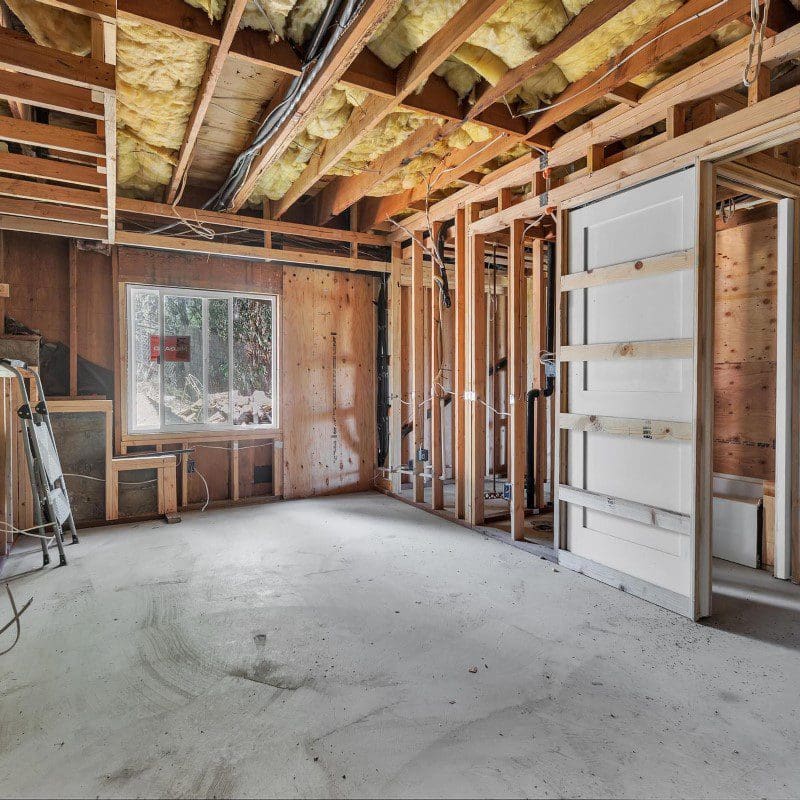
It’s a design approach that uses architectural elements—walls, partitions, changes in level, and strategic openings—to create distinct, purpose-driven rooms while maintaining a sense of overall connection and light. It’s about balance, not isolation. Think of a pocket door that seals off a noisy home office, or a half-wall that defines the living area without fully enclosing it.
Why the shift back? A few hard truths from lived-in homes.
The open floor plan sold a dream: the family seamlessly interacting, the cook never leaving the party. The reality, as many of our San Diego clients have confessed, often involves the relentless visibility of daily clutter, the cacophony of competing noises (blender, video game, Zoom call), and a lack of retreat. After years of togetherness, people are craving places to be apart. It’s a functional and psychological need. You can’t hide a messy kitchen in an open plan, and sometimes, you just want to read a book in a quiet corner without being in the middle of the household’s energy.
It’s not about going backwards.
This is the crucial point. Nobody is asking us to rebuild the warren of small, dark rooms found in some older Point Loma or North Park craftsman homes. The goal isn’t to shrink and confine. It’s to define and dignify. We’re using design to give activities their own dedicated space. A defined dining room makes dinner feel like an event. A closed-off media room improves sound and focus. A primary suite that feels like a true retreat, not just an extension of the bedroom hallway, adds immense value to daily life.
The tools for intentional separation.
We’re not just throwing up drywall everywhere. The artistry is in choosing the right tool for the desired effect. Here’s a practical breakdown of the options we consider, and more importantly, why we might steer a client toward one over another.
| Separation Method | Best For Creating… | The Trade-Off & Reality Check |
|---|---|---|
| Full Wall with Door | True acoustic & visual privacy (offices, music rooms, guest suites). | The most “closed” option. Can impact natural light flow and feel too abrupt if not designed well. Permitting and structural checks are a must. |
| Partial Wall (Pony Wall) or Thickened Millwork | A visual boundary without killing light; a place for display or counter seating. | Defines space but doesn’t contain sound or smells. Great between a kitchen and living area to hide counter clutter. |
| Glass Partitions (sliding or fixed) | Light transmission & spatial definition while maintaining sightlines. | Expensive. Provides visual quiet but minimal acoustic privacy. Frosted or textured glass helps. |
| Strategic Furniture & Rug Placement | A low-commitment, flexible sense of zones. | The lightest touch. Works in truly open plans to suggest function, but doesn’t solve noise or visual chaos. |
| Change in Floor Level or Material | A subtle, architectural feeling of transition (e.g., sunken lounge). | Can be a tripping hazard and complicates furniture placement. Best conceived during a major renovation, not as an afterthought. |
Where “closed” makes the most sense (and where it doesn’t).
Based on the homes we work in, from La Jolla estates to more modest Santee remodels, some spaces consistently benefit from a door.
- The Home Office: This is the number one request. A physical door you can close at 5 PM is the strongest boundary between work and life. It’s non-negotiable for professional sanity.
- Media Rooms & Loud Hobbies: Containing sound is a kindness to everyone else in the house. It also makes the experience better inside the room.
- The Kitchen/Pantry Backstage: We’re designing more “messy kitchens” or scullies—a closed-off space for the actual cooking chaos, with a beautiful, clean “show kitchen” for serving and interaction. It’s the ultimate cheat code.
- Multi-Generational & Rental Suites: Privacy and separate entrances are legal and personal necessities here.
Conversely, we often advise against fully closing off the core living-dining-kitchen triangle in smaller homes. The sense of spaciousness is too valuable. Here, the partial methods or smart zoning are king.
The San Diego-specific considerations.
Our climate begs for indoor-outdoor flow. A modern closed concept here isn’t about turning inward; it’s about creating a series of defined interiors that each connect powerfully to the outdoors in their own way. A private study might have a door to a secluded courtyard. The open great room still needs to flow to the patio. The challenge is layering these experiences. Also, in many local neighborhoods, adding square footage or reconfiguring layouts requires navigating ADU rules, setback requirements, and coastal commissions. It’s why a simple, non-structural change like a sliding barn door or a built-in room divider can sometimes deliver 80% of the benefit for 20% of the cost and headache.
A word on resale value and the “open plan” dogma.
Real estate agents have long parroted “open concept” as the ultimate selling feature. That’s shifting. A well-executed, intentional floor plan with defined rooms now signals thoughtfulness and luxury. It speaks to privacy, functionality, and acoustic comfort—things people are willing to pay for. The key is that the separation must feel deliberate and high-quality, not like a awkward afterthought. A dark, chopped-up hallway will still turn buyers off. A bright, flowing sequence of purposeful rooms? That’s a compelling story.
So, should you start building walls?
Not necessarily. Start by observing your life in your home for a week. Where do you naturally seek privacy? What noises bother you? Where does clutter accumulate? The answer might be a full wall, or it might be a well-placed bookshelf. The real return of the closed concept is a return to intentionality. It’s moving past a trend to ask what your home actually needs to support your life. Sometimes, the best connection is fostered by having a quiet place to disconnect. If mapping that out feels overwhelming, that’s where a professional like our team at Golden Shore Design & Build can help—we translate those daily frustrations into built solutions that make your home work better for you, not against you.
The goal was never to live in one giant room. The goal was to live well. It turns out, that might require a few good doors.
Related Articles
Is Your Kitchen Layout Working Against You? Here’s The Fix
Open Concept Vs. Defined Spaces: What’s Best For Your San Diego Home
People Also Ask
Closed concept house plans feature distinct, separate rooms with walls and doors, offering privacy and noise reduction between spaces. This traditional layout is ideal for formal entertaining, as it contains kitchen odors and limits visibility of clutter from other areas. Each room serves a dedicated purpose, which can enhance focus and organization. However, it often results in less natural light flow and can make spaces feel smaller compared to open floor plans. For families or individuals valuing defined living zones and acoustic separation, closed concepts provide a classic, compartmentalized living environment that supports varied simultaneous activities without disturbance.
A broken floor plan, often called an open floor plan, intentionally removes walls between key living areas like the kitchen, dining, and living room to create a unified, flowing space. This design prioritizes natural light, improves sightlines for supervision, and enhances social interaction, making it ideal for modern living and entertaining. However, it can present challenges with noise control, lack of privacy, and defining distinct functional zones. Effective implementation requires strategic furniture placement, consistent flooring, and the use of area rugs, lighting variations, or partial walls to subtly delineate areas without closing them off. It is a cornerstone of contemporary residential design by firms focused on spacious, light-filled environments.
A closed concept house for sale typically features defined, separate rooms with walls and doors, offering privacy and noise reduction between spaces. This layout appeals to buyers seeking traditional living areas, such as formal dining rooms, dedicated home offices, or quiet bedrooms. When marketing such a property, emphasize its potential for multifunctional use and the clear separation of living zones, which can be a significant advantage for families or those who work from home. Highlight quality construction, sound insulation, and the opportunity for personalization. In today's market, while open floor plans are popular, a well-maintained closed concept home can attract buyers looking for classic architecture and distinct room definitions.
A split-level floor plan is a residential design that divides living spaces into multiple levels, typically with short flights of stairs connecting them. This layout often features a main entry point on a middle level, with living areas like the kitchen and living room, while bedrooms are situated a half-level up and a family room or garage a half-level down. This design efficiently utilizes vertical space on a sloped lot and creates distinct zones for public and private activities. It offers more separation and visual interest than a traditional ranch, though the frequent stairs may not suit all households. Proper design ensures good flow and natural light between the levels.
An open floor plan eliminates walls between key living areas like the kitchen, dining, and living room to create a single, expansive space. This design promotes a strong sense of togetherness, improves natural light flow, and enhances sightlines, making a home feel larger and more connected. It is ideal for entertaining and modern family living. However, careful planning is required to define functional zones through furniture placement, lighting, and varying floor materials. Acoustics and a lack of privacy can be challenges. A professional design-build firm can ensure the structural integrity is maintained while creating a cohesive, functional layout that balances open space with necessary definition.