
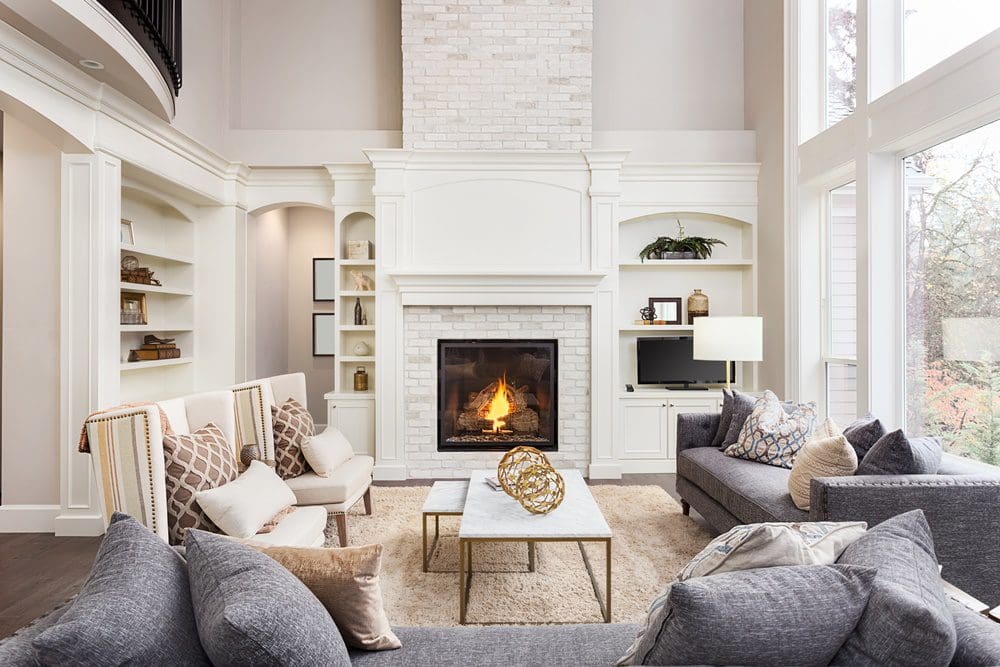

The renovation turned out even better than we pictured. Everyone involved was easy to talk to and kept us in the loop through every stage. Work moved along smoothly and the results look fantastic. Friends keep asking who did the work.

We recently had our outdated bathroom remodeled by Golden Shore Design and Build, and Chris was exceptional throughout the entire process. His attention to detail and commitment to quality truly transformed our space into a luxurious retreat. I highly recommend their services for anyone looking to upgrade their home.

The whole house renovation gave our place a fresh new feel. Each room flows naturally into the next. We are proud of how it all turned out

We recently finished a complete kitchen renovation and are very satisfied with our construction and renovation firm. From the initial design consultation through to the final walk-through, the staff at this company displayed a remarkable level of professionalism and knowledge. Our project manager kept us fully apprised of the progress through daily updates and was very responsive to all of our inquiries. The staff were very considerate, on time, and maintained a remarkably clean construction site, causing little disruption to our daily routine. The workmanship is of the highest quality, and they completed the project right on time and within the agreed-upon budget with no surprises.

Professional builders providing neat finishes and smooth project coordination.

The remodel on our place included a few tricky parts but this team knew exactly what they were doing. Their design sense made the layout flow better than it ever has. It feels like a real upgrade in terms of value.

I brought them in for a full home remodel and the whole experience felt smooth and straightforward. Their design ideas actually made the renovation feel exciting instead of stressful. You can tell the builders care about a quality build from start to finish.

I hired them for a residential remodel, and I’m blown away by the results. The design process was smooth and collaborative, which made the whole project stress-free. These guys really know how to deliver a great renovation.

My bathroom and kitchen renovation turned out strong across the board. Their remodel contractor kept communication easy and never made things confusing. The quality build shows and the place feels refreshed in the best way.

I had this business remodel two bathrooms and both turned out perfect. They made sure I was comfortable while the work was being done. The results speak for themselves.
Creating a 3D design for free is accessible with several powerful software options. For beginners, Tinkercad is an excellent web-based tool with an intuitive drag-and-drop interface, ideal for simple models and learning core concepts. For more advanced organic modeling and animation, Blender is the industry-standard free, open-source software with a vast toolkit for modeling, sculpting, and rendering. If you're interested in engineering or precise CAD, Fusion 360 offers a free personal-use license with professional-grade features. Start by choosing software that matches your project type, utilize the extensive free tutorials available on platforms like YouTube, and begin with simple projects to build foundational skills in the 3D workspace.
Free 3D prints are often available through public libraries, universities, and maker spaces that offer community access to 3D printers for a low cost or sometimes free with membership. Many local innovation hubs or tech workshops host open nights where you can bring a design file. Additionally, online communities and forums sometimes run contests or promotions where winners receive free printed objects. For consistent access, consider joining a local maker collective; while there may be a nominal membership fee, it provides ongoing resources. Always ensure your 3D model file is prepared and sliced correctly according to the specific printer's requirements before submitting it for printing.
The current best-selling 3D prints are practical, customizable items. Home organization solutions, like drawer organizers, cable clips, and planters, are consistently popular. In the hobbyist realm, detailed miniatures for tabletop gaming and functional upgrades for tech gadgets (e.g., phone stands, Raspberry Pi cases) see high demand. Personalized items, such as custom nameplates and jewelry, also perform well, as they leverage 3D printing's strength in on-demand customization. For commercial success, focus on solving everyday problems with durable, well-designed prints. Using high-quality materials like PETG or premium PLA and offering a range of colors can significantly increase perceived value and customer satisfaction.
For 3D design, the best application depends heavily on your specific industry and project goals. For professional architecture, engineering, and construction, Autodesk Revit is the industry standard for Building Information Modeling (BIM), integrating intelligent 3D models with crucial data. For more artistic or conceptual architectural visualization, SketchUp offers intuitive modeling, while 3ds Max provides powerful rendering and animation. In manufacturing and product design, SolidWorks and Autodesk Fusion 360 are leading parametric CAD solutions. For general-purpose 3D modeling, animation, and VFX, Blender is a powerful and free open-source option. Evaluating your workflow, collaboration needs, and required output (e.g., construction documents, photorealistic renders, or fabrication files) is essential for selecting the right tool.
For those seeking free 3D print models, numerous online repositories offer a vast selection. Key platforms include Thingiverse, Cults 3D, and MyMiniFactory, which host thousands of user-generated designs ranging from practical tools to artistic sculptures. When downloading, always check the license (often Creative Commons) for commercial use restrictions. For architectural or product design applications, consider models from GrabCAD. It's crucial to ensure the model is manifold (watertight) and properly scaled for your printer. While free models are excellent for prototyping and hobby projects, complex or highly detailed commercial designs typically require purchase to support the original creators and guarantee print-ready files.
Finding high-quality free 3D print models is a great way to explore the technology. The best platforms include Thingiverse, which offers the largest community-driven library, and Printables, known for its excellent curation and user-friendly interface. For more artistic or detailed models, Cults3D and MyMiniFactory also provide robust free sections. When selecting models, always check the license for commercial use restrictions and read user reviews to gauge printability. Ensure the model is offered in a compatible file format, typically STL or OBJ, and that the designer has provided necessary support recommendations. These repositories are invaluable resources for both hobbyists and professionals looking to test designs or find creative projects.


66 reviews