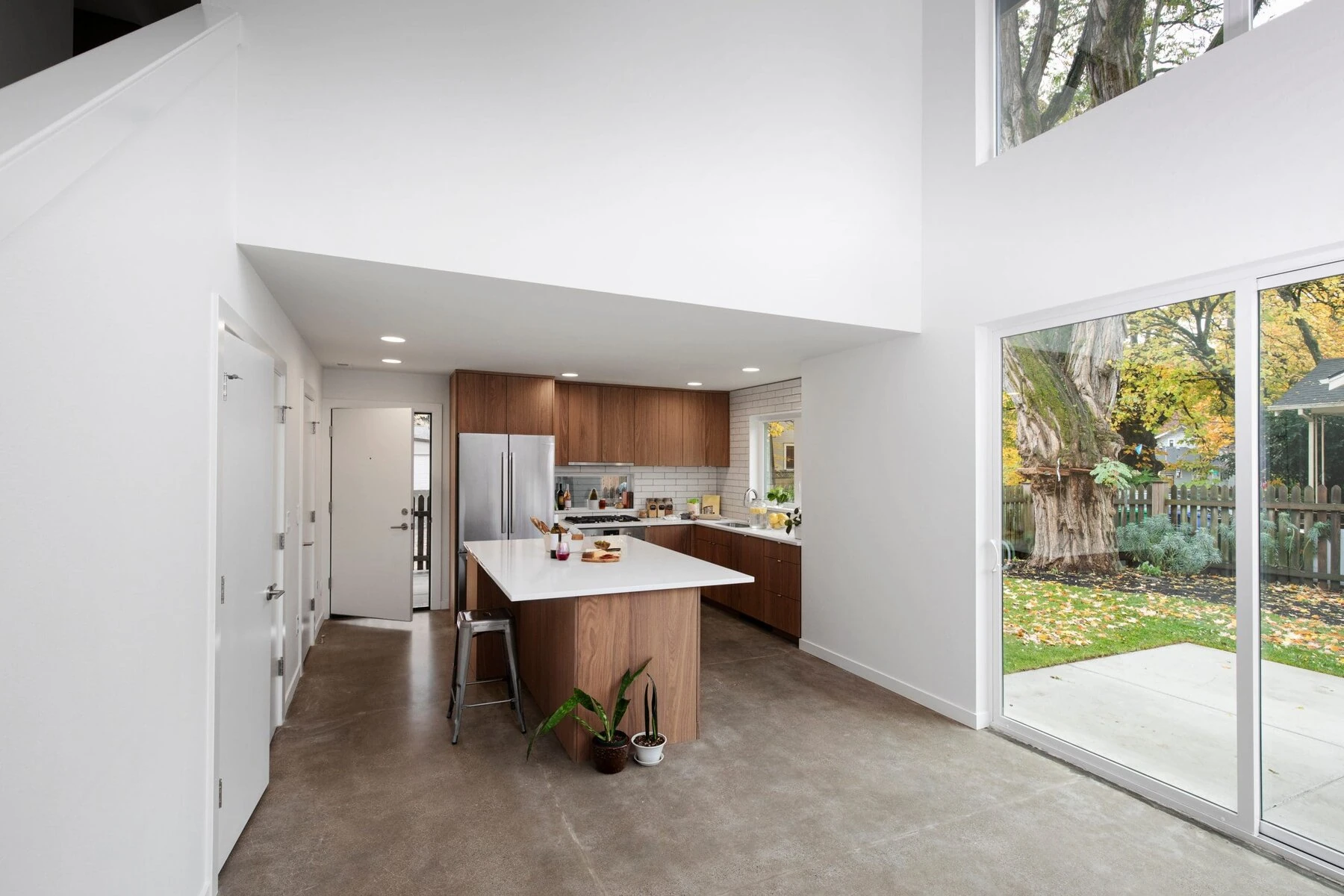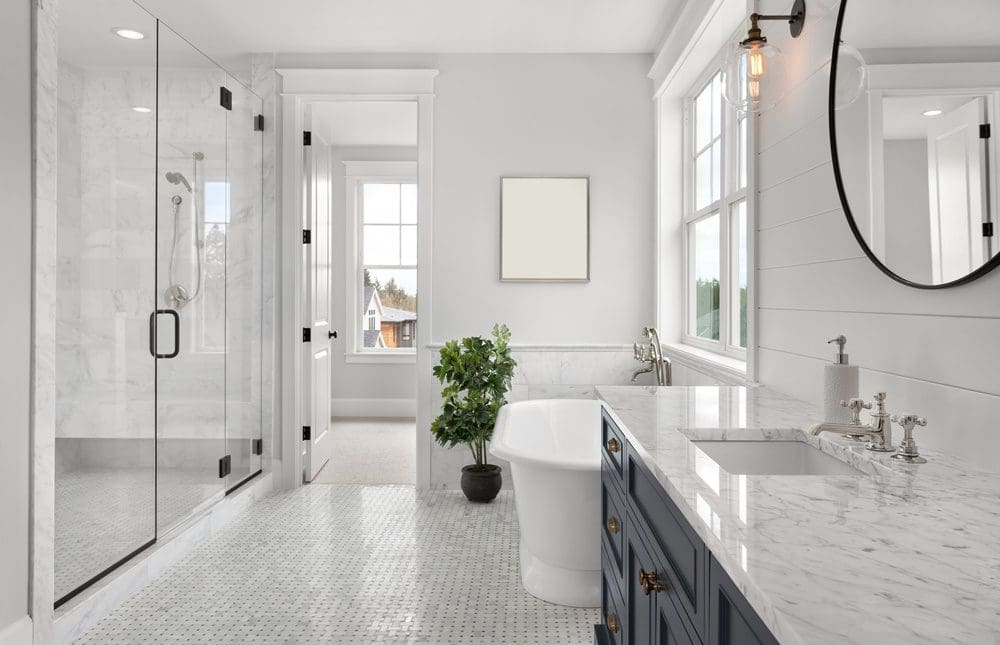
We’ve all walked into a house where the line between inside and out feels sharp, almost jarring. You step through a sliding glass door, and suddenly you’re on a concrete slab that has nothing to do with the living room floor. That disconnect isn’t just an aesthetic issue. It changes how you actually use your home. You might find yourself avoiding the backyard because it feels like a separate chore rather than an extension of your daily life.
The goal of connecting indoor and outdoor spaces isn’t about building a patio and calling it done. It’s about creating a flow that makes sense for how people actually live. We’ve seen homeowners in San Diego spend thousands on landscaping only to realize they rarely step outside because the transition feels awkward. The real trick is blending materials, levels, and sightlines so that moving from the kitchen to the deck feels natural, not like crossing a border.
Key Takeaways:
- Material continuity (using the same flooring or a complementary tile) is the single most effective way to blur the line between indoors and out.
- Proper elevation planning prevents drainage nightmares and awkward step-ups that ruin the flow.
- Sliding or folding glass walls are great, but only if your roof overhang and climate control are already sorted.
- Local climate in San Diego means you can prioritize shade and breeze management over full weatherproofing, but you still need to think about sun exposure and coastal moisture.
Table of Contents
The Floor Shouldn’t Announce a Change
The biggest mistake we see is treating the indoor floor and the outdoor floor as completely separate decisions. You install hardwood inside and then pick a random paver for the patio. That visual break makes the transition feel forced. The better approach is to choose materials that either match or complement each other in tone and texture.
If you have large-format porcelain tiles inside, consider running the same tile (or a frost-proof outdoor version) straight through to the patio. We’ve done this on projects near Balboa Park where the living room floor extended out under a covered pergola. The result was a single, seamless surface that made the room feel twice as large. The catch is that you need to account for expansion joints and proper slope for drainage. A flat indoor tile laid outside without any pitch will puddle water right at your door.
For homeowners who want wood inside but stone outside, we often recommend a limestone or travertine that shares a similar warm undertone. The eye registers the similarity even if the materials are different. Avoid stark contrasts like dark walnut inside with bright white concrete outside. That creates a visual stop sign.
Elevation Changes: The Hidden Flow Breaker
A three-inch step-up or step-down might not seem like a big deal until you’re carrying a plate of food and a drink. We’ve remodeled homes in the La Jolla area where the original builder poured a patio six inches below the interior floor. Every time you walked out, you had to watch your feet. That kind of interruption kills the natural flow.
The ideal is a flush threshold where the indoor floor and outdoor floor meet at the same level. This requires careful planning during construction, especially if you’re adding a new patio or deck to an existing house. You may need to build up the exterior grade with a sleeper system or adjust the interior subfloor. It’s not cheap, but it’s worth it.
If a flush transition isn’t possible (and sometimes it truly isn’t), use a gentle ramp or a wide step with a deep tread. A single narrow step is a trip hazard and visually breaks the space. A broad, shallow step that spans the entire opening feels intentional and inviting.
Glass Walls Are Only Part of the Puzzle
Everyone loves the idea of a giant folding glass wall that disappears into a pocket. And honestly, they do look amazing. But we’ve seen too many homeowners install them without thinking about what happens when the sun moves. In San Diego, the afternoon sun can turn a south-facing glass wall into a greenhouse. You end up closing the curtains, which defeats the whole purpose.
Before you commit to a glass wall system, consider your roof overhang. A deep eave or a retractable awning can block high-angle summer sun while letting in lower winter light. We’ve had clients in North Park who installed a 16-foot folding door system but had to add exterior roller shades six months later because the living room was unbearable by 3 PM.
Also, think about the track. Outdoor tracks collect dirt, leaves, and pollen. If you’re near the coast in Pacific Beach, salt air can corrode aluminum tracks faster than you’d expect. Choose a system with a low-profile, self-cleaning track and stainless steel components. It costs more upfront but saves you from a sticky, grinding door in two years.
Climate Reality: San Diego Isn’t Hawaii
We love San Diego weather, but it’s not perfect for outdoor living year-round. The marine layer can make evenings chilly and damp, especially in neighborhoods closer to the coast like Ocean Beach or Mission Hills. A fully open indoor-outdoor space might not be comfortable for eight months of the year unless you plan for it.
Consider adding a heat source like a gas fire pit or an infrared heater mounted under the patio cover. On the flip side, we get Santa Ana winds that can whip through an open space and scatter cushions, napkins, and anything not bolted down. A windbreak, either a glass panel or a solid wall on the prevailing wind side, makes the space usable on those days.
We’ve also learned that outdoor kitchens in San Diego need to account for the morning dew. Stainless steel appliances are standard, but we’ve seen countertops made of soapstone or concrete absorb moisture and develop micro-cracks over time. Quartzite or porcelain slabs hold up better in our climate.
The Shade Dilemma
One thing we hear constantly from clients is that they want to be outside but their patio is a sun trap. San Diego gets over 260 sunny days a year, which is great until you’re trying to eat lunch on your deck in July. Shade is not optional.
There are three main approaches, and each has trade-offs. A solid roof extension gives full shade and protects from rain, but it blocks light to your interior windows. A pergola with louvers lets you adjust the angle, but it’s mechanical and can break. A shade sail is cheap and looks modern, but it sags over time and collects leaves.
Our preference for most homes is a hybrid: a solid roof over the area closest to the house, with a louvered pergola extending beyond that. This gives you a dry pathway right outside the door while still allowing filtered light deeper into the yard. We installed this setup for a family in Kensington, and they told us their outdoor seating area went from unusable in summer to their favorite spot.
Drainage and Grading: The Unsexy Hero
Nobody thinks about drainage when they’re dreaming about an outdoor fireplace and a built-in BBQ. But we’ve seen more projects fail because of water than because of bad design. If your patio slopes toward the house, you will get water intrusion. If your deck is level with the interior floor but the ground outside is higher, you will get moisture wicking up through the slab.
The fix is to grade the soil away from the foundation before you pour any concrete or lay any pavers. In San Diego, we often have clay-heavy soil that doesn’t drain well. A French drain or a channel drain along the edge of the patio can save you from a wet crawlspace. We always tell clients: spend the money on drainage now, or spend more on foundation repair later.
For homeowners in older neighborhoods like Hillcrest or University Heights, where lots are small and drainage paths are limited, we sometimes recommend a raised deck instead of a ground-level patio. That lifts the living surface above the grade and eliminates most water concerns.
When to Bring in a Pro (and When Not To)
We’re all for DIY when it makes sense. Painting a fence, planting a garden, even building a simple fire pit ring. But connecting indoor and outdoor spaces involves structural changes, electrical work, and waterproofing. Getting those wrong can lead to leaks, electrical hazards, or a patio that sinks unevenly.
If you’re planning to remove a wall and install a glass door system, that’s a load-bearing issue. You need an engineer or a licensed contractor to size the header. We’ve seen homeowners in San Diego try to DIY this and end up with a sagging roofline. That’s not a weekend project.
On the other hand, if you’re just swapping out a sliding glass door for a larger one in the same opening, and the framing is sound, a skilled carpenter can handle that. Know the difference. The money you save on a simple door swap can go toward better flooring or a nice outdoor heater.
Cost Realities and Trade-Offs
Let’s be honest about money. A seamless indoor-outdoor connection is not cheap. Here’s a rough breakdown of what we see in San Diego for a typical 200-square-foot patio project:
| Element | Budget Option | Mid-Range | High-End |
|---|---|---|---|
| Flooring (materials + install) | Concrete pavers, $1,500 | Porcelain tile, $4,000 | Natural stone, $7,000 |
| Glass door system (sliding) | Standard sliding door, $3,000 | Multi-slide door, $8,000 | Folding wall, $15,000 |
| Patio cover | Aluminum pergola, $2,500 | Wood pergola with louvers, $6,000 | Solid roof extension, $12,000 |
| Outdoor kitchen (basic) | Portable grill + cart, $500 | Built-in gas grill + counter, $3,000 | Full kitchen with fridge/sink, $8,000 |
| Heating/lighting | String lights + propane heater, $300 | Low-voltage LED + gas fire pit, $2,000 | Integrated radiant heat + smart lighting, $5,000 |
The trade-off is clear: you can do a lot with a modest budget if you focus on one or two elements. Flooring and a good door system give you the most impact for the money. Skip the outdoor kitchen if you have to choose. Most people we work with end up using a simple grill more than a built-in setup anyway.
When This Advice Doesn’t Apply
Not every house is a good candidate for a fully open indoor-outdoor space. If you live in a condo with a small balcony, or a home on a steep hillside where the yard is 20 feet below the living room, you’re better off focusing on views and a small seating area rather than trying to force a physical connection.
Similarly, if your home faces a busy street or a neighbor’s wall, opening up the space might just give you a nicer view of noise and privacy issues. In those cases, we’ve recommended keeping the glass wall but adding frosted film or strategic landscaping to create a buffer. Sometimes the best connection is visual, not physical.
The Real Goal
At the end of the day, connecting your indoor and outdoor spaces should make your home feel larger and your life easier. It’s not about following a trend or impressing guests. It’s about being able to walk from the kitchen to the grill without stepping over a threshold, or sitting in your living room and feeling like the garden is part of the room.
We’ve seen families in San Diego completely change how they use their home after a thoughtful remodel. The backyard becomes the default gathering spot. Kids run in and out without tracking mud everywhere because the transition is smooth and the materials are forgiving. That’s the win.
If you’re considering a project like this, start with the floor and the door. Those two elements do the heavy lifting. Everything else—furniture, lighting, plants—is decoration. And if you’re in San Diego and want to talk specifics about your home, Golden Shore Design & Build has worked through enough of these projects to know what works in our climate and what doesn’t. Sometimes the best advice is just hearing what went wrong on a similar job so you can avoid it.
A well-connected home doesn’t happen by accident. It takes planning, honest budgeting, and a willingness to prioritize function over flash. But when it comes together, it feels less like a renovation and more like you finally unlocked a room you didn’t know you had.
People Also Ask
To create a seamless indoor-outdoor deck experience, focus on three key design principles: continuity of materials, visual flow, and functional zoning. Use the same flooring or a complementary decking material that extends from inside to outside, blurring the boundary. Large sliding or folding glass doors are essential for removing physical barriers. Coordinate color palettes and furniture styles between spaces to create a unified aesthetic. For a deeper understanding of these concepts, our internal article Transforming Your Backyard Into A True Outdoor Room provides expert guidance. At Golden Shore Design and Build, we recommend considering covered structures or retractable awnings to protect the transition zone, ensuring comfort in San Diego's varied microclimates. This approach turns your deck into a natural extension of your living area.
To blur the lines between indoor and outdoor in your backyard, start by using consistent flooring materials, such as extending your indoor tile or hardwood onto a covered patio. Large sliding glass doors or bi-fold walls create a seamless transition when fully opened. Incorporate similar color palettes and furniture styles between the two spaces to create visual flow. Adding a pergola or awning provides shade while maintaining an open feel. For detailed design strategies, refer to our internal article Transforming Your Backyard Into A True Outdoor Room, which explores how to create a cohesive living environment. Golden Shore Design and Build recommends integrating outdoor rugs, weather-resistant cushions, and potted plants to soften the boundary, making your outdoor area feel like a natural extension of your home.
To create a cozy and inviting outdoor space, focus on layering elements that add warmth and comfort. Start with soft, weather-resistant textiles like outdoor rugs, plush cushions, and throw blankets to define seating areas. Incorporate ambient lighting, such as string lights, lanterns, or solar-powered path lights, to create a soft glow after sunset. Adding natural elements like potted plants, a small water feature, or a fire pit can also enhance the atmosphere. For a truly transformative approach, consider designing a space that functions as an extension of your home. For more detailed guidance, Golden Shore Design and Build recommends reading Transforming Your Backyard Into A True Outdoor Room, which explores how to blend comfort and style seamlessly into your backyard.
An outdoor entertainment area is commonly referred to as a hardscape living space or an outdoor room. These terms describe a designated zone in your yard designed for socializing, dining, or relaxing, often featuring durable materials like stone, concrete, or pavers. Key elements include patios, pergolas, outdoor kitchens, and fire pits, which extend your home's livable square footage into the fresh air. For expert guidance on designing such a space, Golden Shore Design and Build recommends reviewing our article titled Transforming Your Backyard Into A True Outdoor Room, which covers layout, material selection, and functional zoning. This approach ensures your area is both stylish and practical for hosting gatherings.