Let’s be honest: the dream of having your parents close enough to help with the kids, but far enough away that you don’t lose your mind, is a tightrope walk. For years, the only real options were either a sprawling house you couldn’t afford or a cramped duplex that felt like a compromise on everyone’s privacy. Then came the Accessory Dwelling Unit (ADU), and it quietly changed the whole conversation.
If you’ve been researching ADUs as a modern solution for multi-generational living, you’ve probably already seen the numbers: they add square footage, boost property value, and can generate rental income. But what the glossy real estate blogs don’t tell you is that the real value isn’t on the balance sheet. It’s in the daily logistics of sharing a life with people you love, but don’t necessarily want to share a bathroom with. We’ve been designing and building these units for years in San Diego, and we’ve watched families go from “we’re going to kill each other” to “this actually works.”
Table of Contents
Key Takeaways
- ADUs solve the privacy vs. proximity problem that multi-generational living creates.
- Local zoning (like San Diego’s ADU ordinance) has made it easier to add a second unit without a full lot split.
- Cost per square foot is typically lower than buying a larger home, but you must account for utility upgrades.
- The biggest mistake families make is underestimating soundproofing and separate HVAC zones.
- Not every property is a good candidate; slope, access, and setback rules can kill a project.
Why Multi-Generational Living is More Than a Trend
We’ve seen a real shift in who walks through our doors. Five years ago, most ADU inquiries were about rental income. Today, more than half are about family. Parents moving in because they can’t afford assisted living. Adult children returning after college because San Diego rent is absurd. Siblings pooling resources to buy a property together.
The underlying driver isn’t just economics, though that’s a big part of it. It’s the realization that the nuclear family model we all grew up with is actually pretty fragile. When a grandparent lives 45 minutes away, the support network weakens. When a teenager has their own tiny house in the backyard, everyone gets more sleep. Multi-generational living isn’t a compromise; it’s a return to something older and more practical.
From a construction standpoint, this shift matters because it changes the design brief. A rental ADU can be a box with a kitchen. A family ADU needs to feel like a real home. It needs to be comfortable for someone who might be 75 and someone who might be 25. That requires different thinking about doors, thresholds, and even where you put the thermostat.
The Real Trade-Offs of Adding an ADU
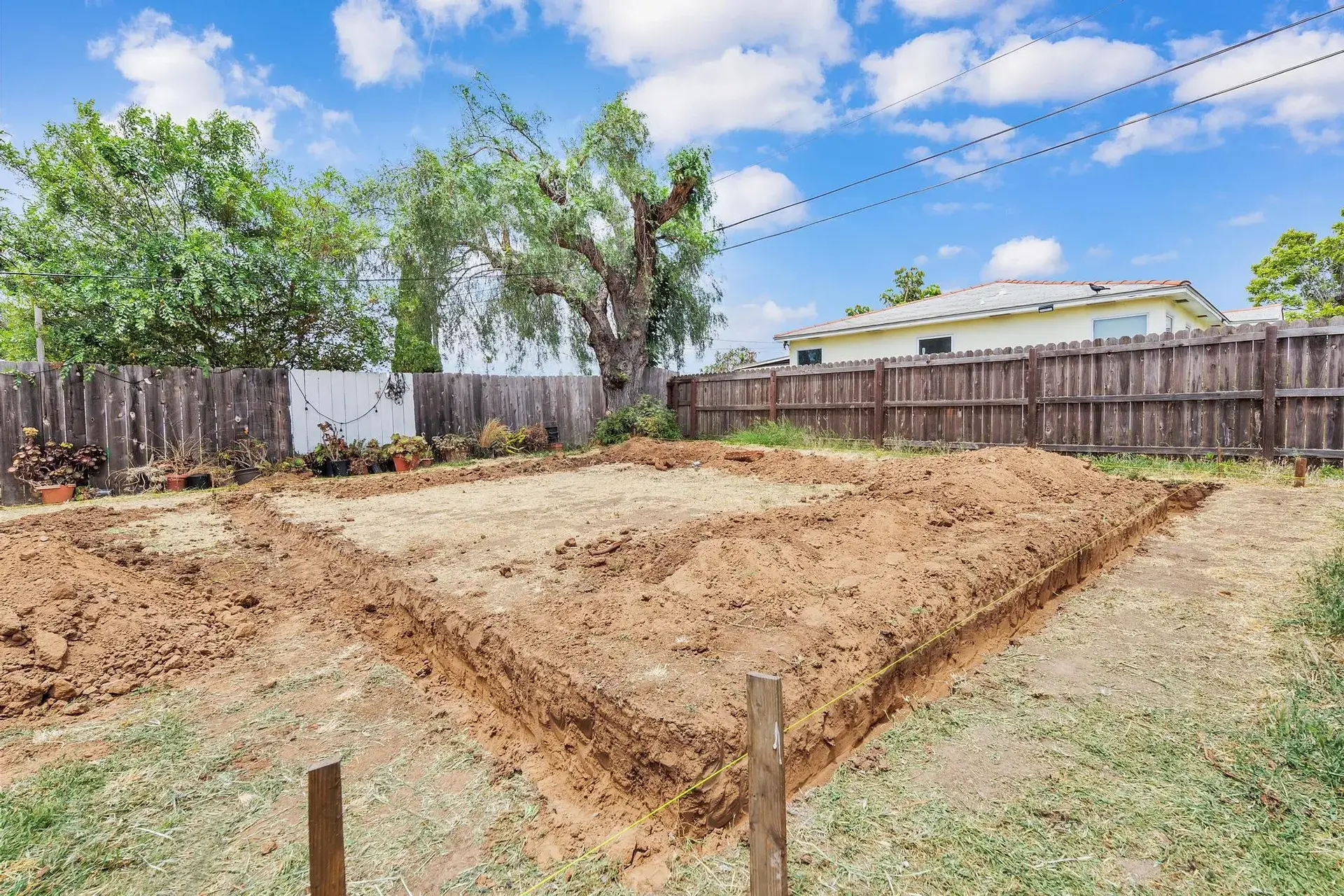
Let’s not pretend this is all sunshine. Adding a detached ADU to a single-family property involves real trade-offs. You lose backyard space, which in San Diego is already precious. You might lose a view corridor or a mature tree that you love. You’ll also lose a chunk of your savings, because even a basic 500-square-foot unit will run you somewhere in the range of $150,000 to $250,000 depending on finishes and site conditions.
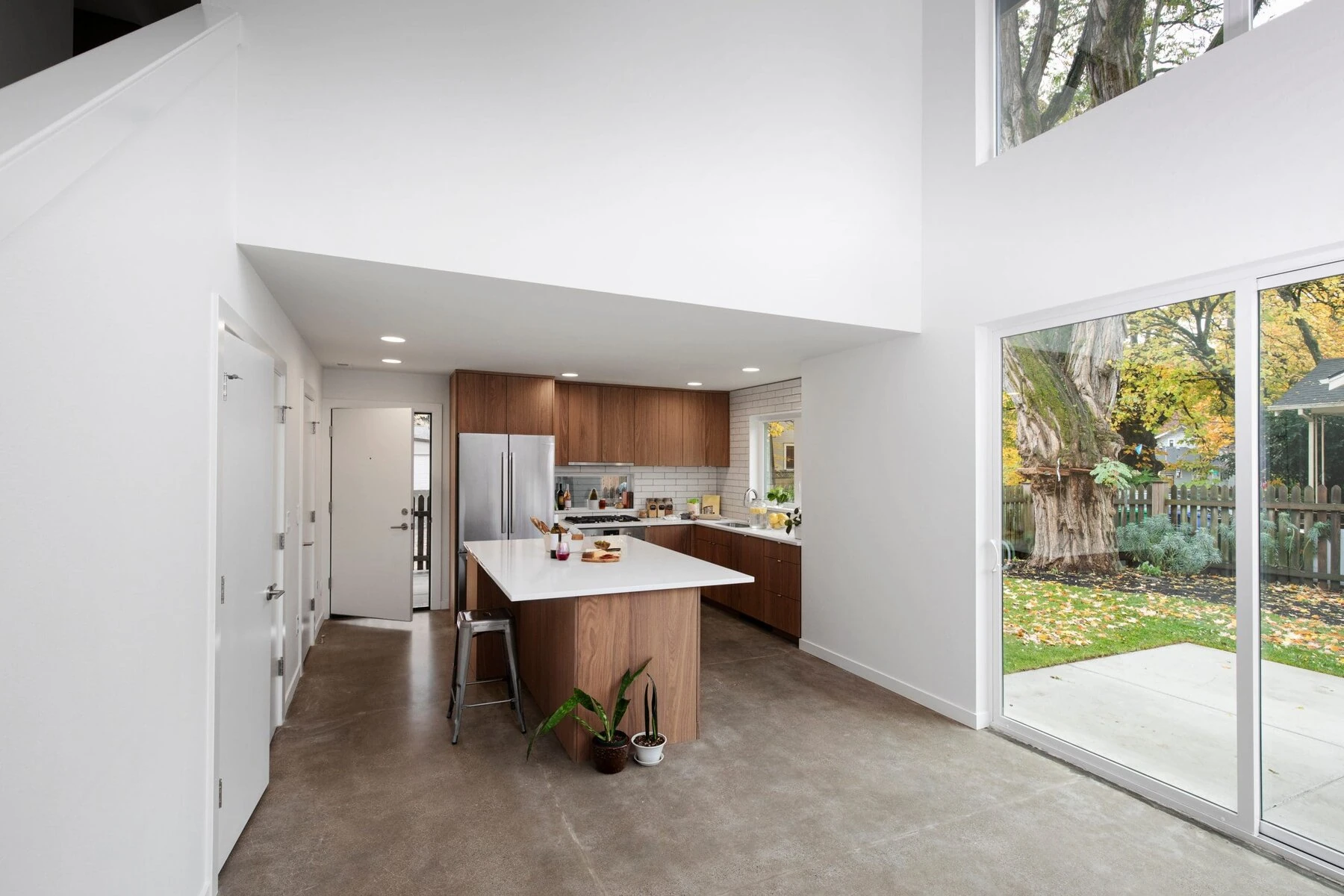
But here’s the trade-off we see families make over and over: they trade a big, empty living room for actual, usable space. The main house becomes smaller, but more functional because you’re not storing grandma’s china in the dining room. The ADU becomes a sanctuary. We’ve built units that are essentially small apartments with a separate entrance, a full kitchen, and a laundry closet. That’s not a guest house; that’s a home.
What Most People Get Wrong About Budgeting
The common mistake we see is people budgeting based on square footage alone. They see a number like $300 per square foot and multiply by 500, then add a buffer. That’s a good start, but it misses the hidden costs. Utility connections are the big one. If your main house is older and the electrical panel is maxed out, you’re looking at a panel upgrade that can add $5,000 to $10,000. If the sewer lateral is old cast iron, you might need to replace it. San Diego’s clay soil also means you’ll likely need deeper footings than you’d expect.
We had a client in North Park who bought a bungalow thinking they could just drop a prefab ADU in the backyard. Turned out the lot had a drainage easement that forced the unit into a corner with a 12-foot setback requirement. The prefab didn’t fit. They ended up with a custom design that cost 30% more. That’s not a horror story; it’s just reality. Always do a site survey before you fall in love with a plan.
Design Choices That Make or Break Multi-Generational ADUs
Designing for family is different than designing for a tenant. A tenant will tolerate a galley kitchen and a tiny bathroom. Your mother-in-law will not. We’ve learned a few things the hard way.
Soundproofing Isn’t Optional
If the ADU is within 20 feet of the main house, you need to treat the walls and roof like a recording studio. We use double-layer drywall with Green Glue in between, and we always insulate interior walls with rockwool, not fiberglass. The difference is night and day. You don’t want to hear the TV from the main house when you’re trying to sleep in the ADU, and you definitely don’t want the ADU’s washing machine waking up the baby.
Separate HVAC or Nothing
This is non-negotiable. A ductless mini-split system for the ADU is the way to go. It gives the occupant full control over temperature without affecting the main house. We’ve seen people try to run a single ducted system to both structures, and it always ends in arguments. One person is freezing while the other is sweating. Spend the extra $3,000 for a separate zone. Your marriage will thank you.
The Bathroom Matters More Than You Think
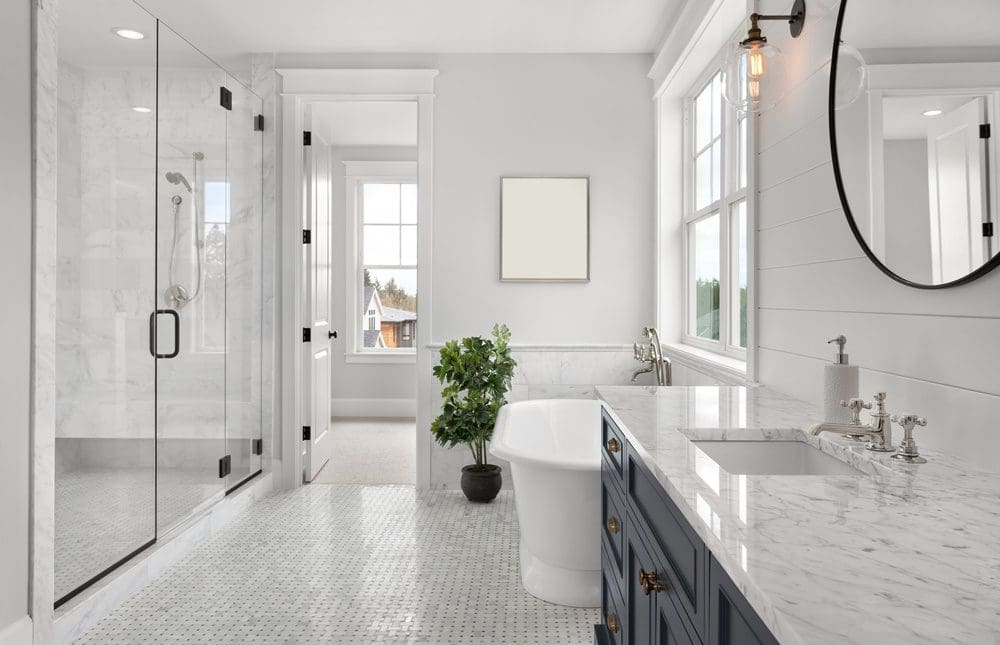
For an elderly parent, a standard 5×8 bathroom with a tub is a hazard. We always spec a curbless shower with a built-in bench and grab bars that look like towel racks. It’s not about making it look like a hospital; it’s about making it usable for the next 20 years. And for an adult child, a big shower with good water pressure is a luxury they’ll actually appreciate.
When an ADU Isn’t the Right Answer
We try to talk people out of ADUs about once a month. Not because we don’t want the work, but because sometimes it’s genuinely the wrong call.
If your lot is on a steep slope, the cost of grading and retaining walls can double the project budget. If your property is in a flood zone, the insurance requirements and elevation demands can make it financially unwise. And if you’re planning to move within five years, the return on investment might not be there. ADUs add value, but the market hasn’t fully priced them in yet in every neighborhood.
Another scenario where we advise caution: if the main house is already too small for the current family. Adding an ADU doesn’t fix a cramped main house; it just gives someone else their own space. If you’re already tripping over each other in a 1,200-square-foot house, an ADU might make things worse by reducing your yard and parking.
How San Diego’s Rules Shape What We Build
San Diego has been ahead of the curve on ADU regulations, but that doesn’t mean it’s simple. The city allows ADUs on any single-family lot, and you can often build up to 1,200 square feet. There’s no owner-occupancy requirement anymore, which is great for investors but changes the dynamic for families.
What we deal with most is the parking requirement. If your property is within a half-mile of a transit stop, you don’t need to add a parking space for the ADU. That’s a huge relief in older neighborhoods like Mission Hills or University Heights where driveways are narrow. But if you’re in a suburban area like Scripps Ranch, you might need to provide a parking space, which eats into your yard.
The city also has a “junior ADU” option, which is a conversion of existing space within the main house. That can be a faster and cheaper route if you have an unused den or a large garage. But it doesn’t give the same privacy as a detached unit. We’ve built both, and for multi-generational living, the detached unit almost always wins.
What We’ve Learned About Permitting
The permitting process in San Diego has gotten faster, but it’s still a slog. Plan check can take 8 to 12 weeks for a custom design. Prefab units can sometimes move faster because they have state-approved plans, but they still need site-specific approvals. The biggest bottleneck is usually the sewer connection. The city wants to see that you have enough capacity, and if you’re in an older neighborhood with combined sewers, that can trigger a whole separate review.
We always tell clients to budget six months from design to permit approval, then another four to six months for construction. If you’re in a rush, you’ll be disappointed.
A Real-World Comparison: Custom vs. Prefab
To help you weigh the options, here’s a honest comparison based on projects we’ve managed:
| Aspect | Custom-Built ADU | Prefab/Panelized ADU |
|---|---|---|
| Cost | $250–$350/sq ft | $200–$280/sq ft (before site work) |
| Timeline | 10–14 months total | 6–10 months total |
| Design Flexibility | Full control over layout, finishes, and orientation | Limited to manufacturer’s plans; modifications cost extra |
| Site Adaptability | Handles slopes, odd lots, and utility constraints well | Requires a flat, accessible site with clear access |
| Quality Control | Depends entirely on your contractor | Factory-built components are consistent, but on-site assembly varies |
| Resale Value | Higher, because it’s permanent and integrated | Good, but some buyers are skeptical of prefab quality |
| Best For | Families with specific needs, tricky lots, or a desire for unique design | Budget-conscious owners with simple, flat lots |
The honest truth: we’ve seen great prefab projects and terrible custom ones. The difference is almost always the contractor, not the method. If you go prefab, vet the installer as hard as you’d vet a custom builder. If you go custom, make sure the builder has actually done ADUs before. It’s a different skill set than building a whole house.
The Emotional Side of the Equation
We don’t talk about this enough in construction, but building an ADU for family is emotionally loaded. We’ve had clients cry during the walkthrough because the unit looked exactly like the childhood home they grew up in. We’ve had siblings argue for weeks over whether the ADU should have a full kitchen or just a kitchenette. (Spoiler: always go full kitchen.)
The best advice we can give is to involve the future occupant early in the design process. Let them pick the countertop color. Let them decide where the windows go. It’s their space, and if they have ownership over it, they’ll be happier. We’ve seen too many cases where the adult child designed a “cool” ADU for their parents, and the parents hated it because it felt like a hotel, not a home.
Final Thoughts
Adding an ADU for multi-generational living is one of the most practical moves a family can make. It’s not cheap, and it’s not easy, but it works. The key is to go in with open eyes: understand the trade-offs, budget for the hidden stuff, and design for the people who will actually live there.
If you’re in San Diego and thinking about this, the best first step is to walk your property with someone who knows the local codes. At Golden Shore Design & Build, we’ve done this enough times to know what works and what doesn’t in this climate, on these lots, with these families. We’ve seen the difference a well-placed ADU can make, and it’s usually worth the headache.
Because at the end of the day, having your mom close enough to bring soup when you’re sick, but far enough away that she can’t hear you argue with your spouse? That’s not a luxury. That’s a life upgrade.
People Also Ask
Yes, multigenerational homes are experiencing a strong resurgence in San Diego, Chula Vista, National City, La Mesa and Spring Valley CA. This trend is driven by rising housing costs and the desire for families to stay connected. Modern designs now include separate entrances, private suites, and dual kitchens to provide privacy while sharing common spaces. For homeowners in these areas, a well-planned layout can increase property value and accommodate aging parents or adult children. Golden Shore Design and Build specializes in creating flexible floor plans that support multiple generations under one roof without sacrificing comfort or style. This approach helps families maintain close bonds while respecting individual needs.
While Accessory Dwelling Units (ADUs) offer many benefits, there are notable downsides to consider. The most significant challenge is the upfront cost, which can range from $100,000 to over $300,000 depending on the type and location. This financial burden often requires a construction loan or significant savings. Additionally, building an ADU can reduce your available backyard space, potentially limiting outdoor living areas for your primary home. There are also ongoing costs, including increased property taxes, higher utility bills, and added maintenance for the new structure. Furthermore, local zoning rules in areas like San Diego and Chula Vista may impose strict parking or setback requirements, which can complicate the project. If you are evaluating these factors, Golden Shore Design and Build can provide a clear breakdown of costs and feasibility for your specific property.
The $40,000 grant in California for ADUs is part of the CalHFA ADU Grant Program, which provides up to $40,000 in financial assistance to eligible homeowners for pre-construction costs associated with building an accessory dwelling unit. This grant can cover expenses like property surveys, soil tests, permits, and architectural plans. It is designed to help offset initial costs before construction begins, and it does not need to be repaid. Eligibility typically requires the homeowner to occupy the property and meet income limits. For homeowners in San Diego, Chula Vista, National City, La Mesa, and Spring Valley CA, Golden Shore Design and Build can help navigate this grant process and ensure your ADU project meets local zoning and design standards.
The Bible offers several examples and teachings that support multigenerational living. In the Old Testament, the fifth commandment to honor your father and mother (Exodus 20:12) implies care and respect across generations. Proverbs 17:6 states that grandchildren are the crown of the aged, and parents are the pride of their children, highlighting mutual blessing. In the New Testament, 1 Timothy 5:4 and 5:8 instruct believers to care for their own household, especially older relatives, as a sign of godliness. While the Bible does not mandate a specific living arrangement, it encourages family unity, support, and the passing of faith from one generation to the next (Deuteronomy 6:6-7). For homeowners in San Diego, Chula Vista, National City, La Mesa, and Spring Valley CA, Golden Shore Design and Build can help create spaces that accommodate this biblical principle through thoughtful home additions or renovations.