
We’ve all stood in a kitchen that just doesn’t work. Maybe it’s the one where the fridge door blocks the island every time someone opens it. Or the layout where two people can’t pass each other without a shoulder check. These aren’t just annoyances—they’re signs that the design prioritized looks over function. And in our experience, that’s the fastest way to turn the heart of the home into a source of daily friction.
The kitchen is where meals get made, homework gets supervised, and conversations happen while someone’s pulling a pan out of the oven. It’s also where most of us spend more waking hours than any other room. So when we talk about designing a kitchen that serves as the heart of the home, we’re not chasing magazine covers. We’re talking about real, daily usability for real people.
Key Takeaways:
- The “work triangle” still matters, but modern kitchens demand more flexible zones for multiple users.
- Material choices should reflect your actual cooking and cleaning habits, not just trends.
- Storage solutions need to be tailored to your specific gear, not generic bins and shelves.
- Lighting is often an afterthought, but it’s the single biggest factor in how a kitchen feels at 6 PM on a Tuesday.
- Professional help becomes essential when structural changes or code compliance enters the picture.
Table of Contents
The Layout Myth That Keeps Tripping People Up
There’s a persistent idea that a kitchen layout is solved by arranging the sink, stove, and refrigerator in a neat triangle. That concept from the 1940s isn’t wrong, but it’s incomplete. Modern kitchens need to accommodate more than one cook, often a kid doing homework at the island, and someone grabbing a drink from the fridge while dinner is being prepped. The triangle becomes a traffic jam.
What we’ve seen work better is thinking in zones. Prep zone near the sink and cutting boards. Cooking zone around the stove with landing space for hot pans. Cleaning zone with dishwasher access that doesn’t block the main walkway. Storage zone for dry goods and small appliances. When these zones overlap logically, the kitchen flows without anyone needing to say “behind you” every thirty seconds.
A common mistake we run into is putting the dishwasher directly next to the sink with no counter space in between. That means wet dishes get dripped onto the floor or counter because there’s nowhere to set them. A few inches of landing space between the sink and dishwasher saves a lot of mopping.
Materials That Earn Their Keep
Granite countertops look beautiful, but they require sealing every year. If you’re not the type to remember that, you’ll end up with stains you can’t remove. Quartz is more forgiving, but it can’t handle a hot pan directly from the stove. Butcher block looks warm and natural, but it needs regular oiling and can harbor bacteria if not maintained.
Our honest advice? Pick materials based on how you actually cook and clean. If you bake a lot, you want a surface that can handle rolling dough and won’t crack under a hot sheet pan. If you’re a family of five who cooks every night, you need something that can take a beating and wipe clean without fuss. In San Diego, where humidity is generally low but coastal salt air can affect certain metals, we often steer people toward stainless steel appliances with a brushed finish—they hide fingerprints better and resist corrosion longer than glossy black or white.
Flooring is another place where people compromise for looks. Hardwood in a kitchen looks gorgeous until the first spill sits too long. Tile is durable but cold on bare feet. Luxury vinyl plank has come a long way and offers a warm look with real water resistance. We’ve installed it in dozens of kitchens around San Diego, and it holds up well even in homes near the coast where moisture is a constant factor.
Storage That Actually Works
The biggest storage mistake we see is designing cabinets around what looks neat in a showroom rather than what you actually own. Those deep lower cabinets with a single shelf? They become a black hole where baking sheets and small appliances go to die. Pull-out drawers are almost always better for lower cabinets because you can see everything at once.
For upper cabinets, adjustable shelving is non-negotiable. You never know when you’ll need to store a tall blender or a stack of mixing bowls. And corner cabinets—the dreaded L-shaped dead zone—are best handled with a lazy Susan or a pull-out system. We’ve seen too many people just leave those corners empty because nothing fits.
One thing we’ve learned the hard way: don’t build storage for hypothetical future needs. If you don’t own a pasta maker now, don’t dedicate cabinet space for it. That space will just fill with things you don’t use. Instead, design storage around your current gear, and leave some flexible open shelving or a cart that can adapt.
Lighting That Changes Everything
Most kitchens come with a single overhead light. That’s fine for finding the cereal, but terrible for cooking. Under-cabinet lighting is the single best upgrade you can make. It eliminates shadows on your countertops and makes chopping vegetables safer and easier. We recommend LED strip lights with a color temperature around 3000K—warm enough to feel inviting, but bright enough to see what you’re doing.
Pendant lights over an island look great, but they need to be positioned correctly. Too low, and they block your view across the room. Too high, and they create glare. A good rule of thumb: hang them 30 to 36 inches above the counter surface. And dimmers are worth the extra cost. You want bright light for cooking, but softer light for eating or hanging out.
If you’re in an older home in a neighborhood like Mission Hills or North Park, you might have limited electrical capacity. That’s when it makes sense to bring in a licensed electrician early in the planning phase. Trying to add under-cabinet lights after the fact can mean running wires externally, which ruins the clean look you’re after.
The Island: Not Just a Pretty Face
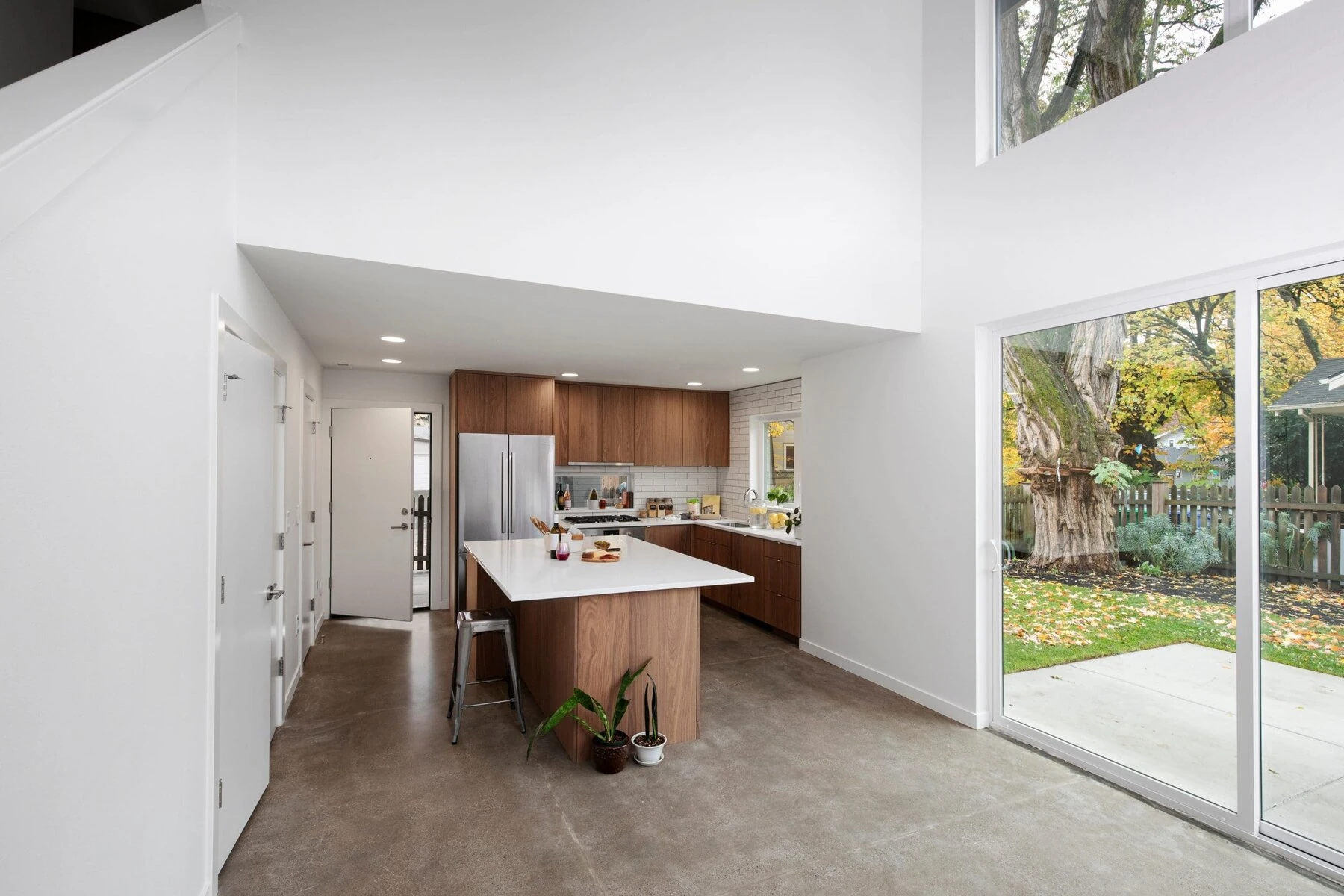
Kitchen islands are popular for a reason. They add counter space, storage, and a gathering spot. But they can also create problems if not sized correctly. A standard island should be at least 4 feet long and 2 feet deep to be functional. Any smaller, and it’s more of a bump-out than a workspace.
We’ve seen islands that are too wide, making it impossible to reach the center from either side. That’s wasted space. And islands without proper clearance around them—at least 42 inches on all sides—create bottlenecks. In a busy kitchen, that’s a recipe for frustration.
If you plan to seat people at the island, remember that bar stools take up space. Allow at least 24 inches of counter length per stool, and leave about 12 inches between the counter edge and the backs of the chairs for legroom. Overhang should be at least 12 inches, but 15 is more comfortable.
When DIY Doesn’t Cut It
We’re all for homeowners taking on projects they can handle. Painting cabinets, swapping hardware, installing a backsplash—those are manageable. But when it comes to moving plumbing, rerouting gas lines, or altering load-bearing walls, that’s where professional experience matters.
In San Diego, local building codes require permits for any structural changes, electrical work, and plumbing modifications. Skipping permits can cause problems when you sell the house. We’ve had clients who tried to save money by doing their own electrical work, only to fail inspection and pay more to have it redone correctly. In that case, hiring a professional upfront saved time, risk, and money.
If your kitchen design involves knocking down a wall to open up the space, you need a structural engineer or a licensed contractor to evaluate whether that wall is load-bearing. Guessing wrong can lead to sagging ceilings or worse. We’ve seen it happen.
Common Mistakes We Keep Seeing
One of the most common is underestimating how much counter space you need. People focus on cabinets and appliances, then end up with a kitchen where every surface is cluttered because there’s nowhere to set things down. A good rule: you should have at least 15 square feet of counter space total, not counting the island.
Another mistake is choosing appliances first and designing the kitchen around them. That backwards approach often leads to awkward layouts. Better to plan the work zones first, then find appliances that fit the space and your needs.
Ventilation is another overlooked item. A cheap recirculating range hood does little more than move grease around. If you cook often, invest in a ducted hood that vents outside. It’s not glamorous, but it keeps your cabinets from getting sticky and your air clean.
Cost Considerations and Trade-Offs
| Feature | Average Cost Range | Trade-Offs |
|---|---|---|
| Custom cabinets | $500–$1,200 per linear foot | Maximum flexibility but high cost; long lead times |
| Semi-custom cabinets | $300–$600 per linear foot | Good balance of choice and price; shorter lead times |
| Stock cabinets | $100–$300 per linear foot | Budget-friendly but limited sizes and finishes |
| Quartz countertops | $60–$120 per square foot installed | Durable, low maintenance, but can’t handle high heat |
| Granite countertops | $50–$150 per square foot installed | Beautiful natural stone, but requires annual sealing |
| Butcher block countertops | $30–$70 per square foot installed | Warm look, but needs regular oiling and careful cleaning |
| Luxury vinyl plank flooring | $4–$8 per square foot installed | Water-resistant and comfortable underfoot, but can dent |
| Porcelain tile flooring | $5–$15 per square foot installed | Durable and stylish, but cold and hard on feet |
These numbers are ballpark and vary by region. In San Diego, labor tends to run higher than national averages due to cost of living. But the trade-off is that you get skilled tradespeople who understand local conditions, like how coastal humidity affects wood expansion or which materials hold up best near the ocean.
When This Advice Doesn’t Apply
Not every kitchen needs a full redesign. If you’re renting, or if your budget is truly tight, focus on smaller upgrades: new hardware, a good backsplash, better lighting. Those changes can transform a space without the cost and disruption of a full remodel.
Also, if you rarely cook and mostly use the kitchen for reheating takeout, the priority shifts toward aesthetics and social space rather than heavy-duty function. That’s fine. Design should match your life, not some ideal.
But if you’re spending real time in the kitchen, cooking for a family, hosting friends, or working from a countertop, then the details we’ve covered matter. They’re the difference between a kitchen that works and one that’s just a room with appliances.
Final Thoughts
Designing a kitchen that truly serves as the heart of the home isn’t about following trends or spending the most money. It’s about understanding how you live and making intentional choices that support that life. We’ve seen kitchens that cost a fortune but feel cold and unusable, and kitchens on a modest budget that feel warm and efficient because every decision was made with purpose.
If you’re planning a kitchen remodel in San Diego, take the time to think through your daily routines. Walk through your current kitchen and note every frustration. That list is your design brief. And when you’re ready to move forward, consider working with someone who’s seen enough kitchens to know what holds up and what doesn’t. Golden Shore Design & Build has been helping homeowners in San Diego create kitchens that actually work for their lives, and we’ve learned a thing or two along the way about what matters most.
At the end of the day, the best kitchen is the one where you want to spend time. Not because it looks perfect, but because it feels right.
Related Articles
Laminate, Tile, Or Hardwood? Choosing Kitchen Flooring For A Active San Diego Home
Revamping Your Kitchen: A Guide
The Secret To A Clutter-Free Kitchen Renovation
From Dated To Dreamy: A Before ; After Tour Of A North Park Kitchen
Beyond The Beach: Modern Kitchen Designs For San Diego Lifestyles
San Diego Whole Home Remodel Timeline: A Month-by-Month Guide From Pre-Design To Final Walkthrough
How To Vet A San Diego Contractor: The Ultimate Checklist
Designing The Perfect Kitchen Appliance Storage Cabinet
People Also Ask
Yes, the kitchen is widely regarded as the heart of the home. This space serves as a central hub for daily activities, from cooking meals to gathering with family and friends. Modern kitchen design focuses on creating a functional and inviting environment that supports both culinary tasks and social interaction. To ensure your renovation stays on track, we recommend reviewing our internal article titled Smart Kitchen Reno Tips To Protect Your Budget for practical guidance. Golden Shore Design and Build emphasizes that a well-planned kitchen can enhance your home's value and livability, making it a true focal point for your household.
To make the kitchen the heart of the home, focus on open layouts that connect naturally to living and dining areas. Choose warm, inviting materials like natural wood and soft lighting to create a welcoming atmosphere. Incorporate a large island with seating for casual meals and conversation. Smart storage solutions keep counters clutter-free, making the space functional for cooking and socializing. Personal touches like family photos or plants add warmth. For a truly transformative approach, consider a comprehensive renovation. Golden Shore Design and Build recommends reviewing our internal article Full Home Remodeling for detailed guidance on achieving this cohesive, central hub in your San Diego home.
The "3 kitchen rule" is a design principle that organizes a kitchen into three distinct work zones: storage, preparation, and cooking. This layout minimizes unnecessary movement, making meal preparation more efficient and safer. The storage zone includes pantries and refrigerators for ingredients, the preparation zone centers on counter space and sinks, and the cooking zone focuses on the stove and oven. For homeowners in San Diego, Chula Vista, National City, La Mesa and Spring Valley CA, applying this rule can transform a cramped or inefficient kitchen into a functional space. Golden Shore Design and Build often recommends this approach to clients. For deeper insight, read our internal article titled Is Your Kitchen Layout Working Against You? Here's The Fix to see how proper zoning can resolve common layout frustrations.
The phrase "the kitchen is the heart of the home" emphasizes that this space serves as the central hub for family connection, nourishment, and daily activity. It is where meals are prepared, conversations happen, and memories are made. In modern home design, this concept often drives open floor plans that integrate the kitchen with living and dining areas, making it a natural gathering spot. For homeowners in San Diego, Chula Vista, National City, La Mesa and Spring Valley CA, creating a kitchen that feels warm and functional is key. For those looking to expand this idea, our internal article Blending Garage And Kitchen Ideas For Entertaining explores how to merge garage and kitchen spaces for seamless entertaining.