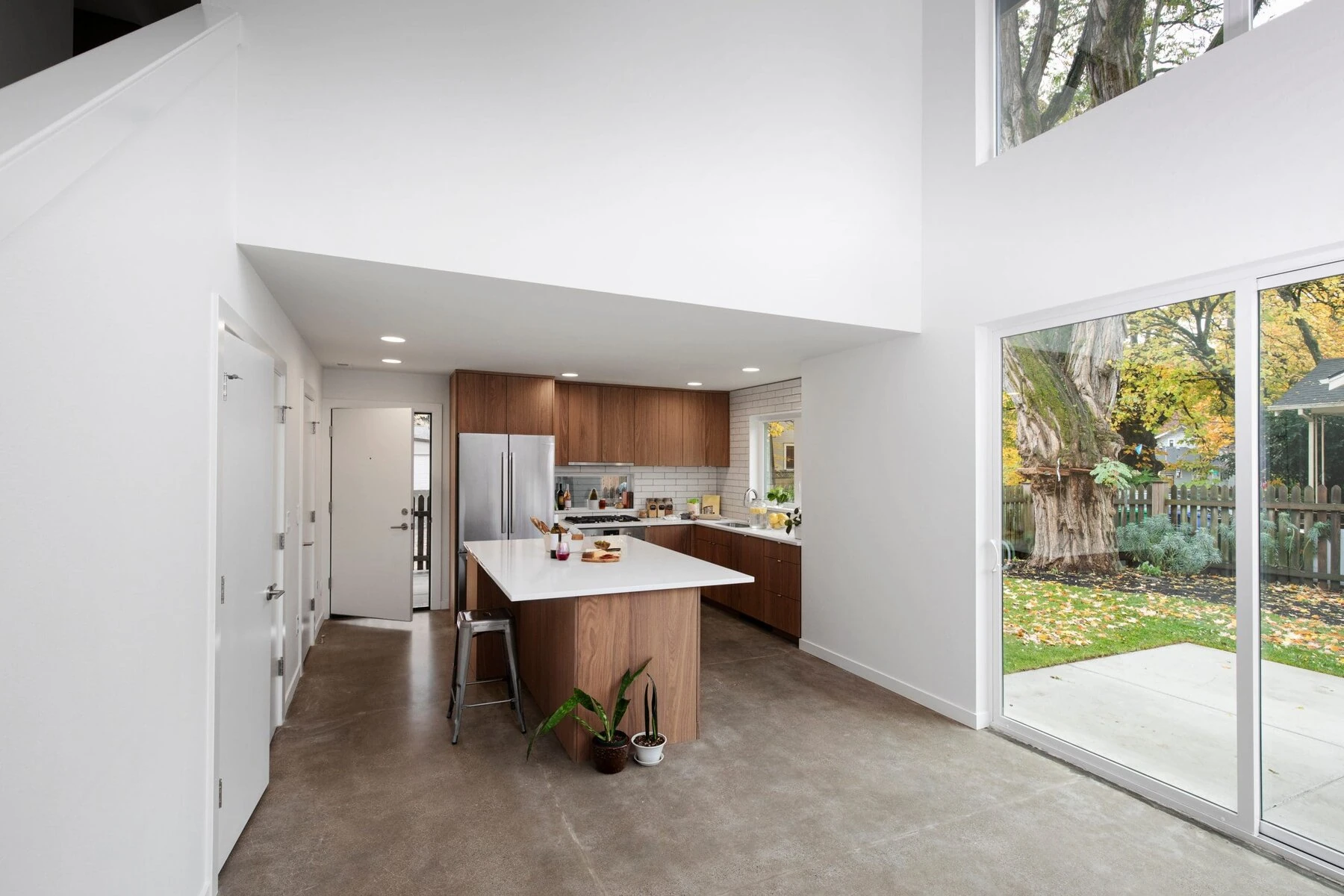
The best stand mixer storage isn’t about hiding it away, but about making it a functional part of your kitchen. The right solution depends on your counter space, how often you bake, and your budget. We’ve seen too many people buy expensive organizers only to realize they’ve created a new problem. Sometimes, the simplest, most obvious spot is the right one.
We’ve all been there. You finally invest in that beautiful, heavy stand mixer, dreaming of perfect doughs and whipped creams. Then it arrives, and the 30-pound reality hits: where on earth does this thing live? It’s too bulky for most cabinets, a pain to lift from a low shelf, and frankly, too pretty to banish to a closet. This isn’t just a storage question; it’s a daily workflow and sanity issue.
What is the best way to store a stand mixer?
The best way to store a stand mixer balances immediate access with protected storage. For frequent bakers, a dedicated countertop appliance garage or a sturdy pull-out shelf within a base cabinet offers the ideal mix of convenience and clutter control. For occasional users, a heavy-duty lift mechanism installed inside a cabinet or on a shelf safely raises and lowers the mixer, saving your back and your counters. The core principle is to minimize the physical effort of moving it, as that’s the main barrier to using it.
Table of Contents
The Counter Conundrum: To Leave It Out or Not?
This is the first, and biggest, debate. The purists say a kitchen tool you use regularly deserves prime counter real estate. I get it. If you bake multiple times a week, lifting that beast is a chore you’ll start to avoid. Leaving it out means you’re more likely to use it.
But here in San Diego, where open, airy kitchens are the norm and space is at a premium, a giant mixer can dominate the visual landscape. We’ve worked with clients in neighborhoods from North Park to Del Mar who love their mixers but hate the clutter. The trade-off is real: convenience vs. a clean aesthetic. There’s no right answer, only your answer. If you choose the counter, commit to it being a design element—keep the area around it tidy, or use a stylish cover.
The Appliance Garage: Not Just a 90s Relic
The modern appliance garage is a game-changer. It’s a dedicated cabinet compartment, usually on the countertop, with a door that closes to hide the mixer (and its attachments). When we design these for clients, we insist on a few non-negotiables: a heavy-duty, full-extension shelf glide to support the weight, and an electrical outlet inside the garage. There’s no point in a hidden mixer if you have to drag it out to plug it in.
The hidden cost? Cabinet depth. Standard base cabinets are 24 inches deep. A KitchenAid Artisan mixer is over 17 inches front-to-back with the bowl. You need breathing room. We often specify a 27-inch deep cabinet for appliance garages to ensure the door can close cleanly without the mixer feeling crammed in. It’s a custom solution, but for the serious baker, it’s the pinnacle of integrated storage.
The Heavy-Duty Lift: A Back-Saver for Occasional Users
If you bake once a month or for special occasions, a countertop sacrifice or custom cabinet might be overkill. This is where a well-installed appliance lift shines. It’s a spring-or-hydraulic-assisted mechanism mounted inside a base cabinet or on a shelf. You open the cabinet door, pull the shelf down, and it locks in place. Use the mixer, then lift it slightly and it retracts back into hiding.
Common mistake we see: People try to install these on particle board shelves or in cabinets not reinforced for dynamic weight. A mixer in motion exerts more force than one sitting still. The lift and the cabinet structure must be rated for the load. It’s not a DIY project for most. If you’re in an older San Diego home with original cabinets, this might not be a viable option without significant reinforcement.
The Simple Pull-Out Shelf: Often the Smartest Choice
Sometimes the most elegant solution is the most straightforward. Converting a standard base cabinet into a mixer home with a full-access, heavy-duty pull-out shelf is a workhorse option. It doesn’t hide the mixer when the cabinet is open, but it solves the two biggest problems: lifting and access.
You simply open the door, pull the shelf out, and the mixer is at a comfortable working height. No bending, no heaving. We often pair this with removal of the cabinet door entirely, creating an open niche if the kitchen style supports it. It says, “This is a tool I use,” and embraces it. The key is the hardware—commercial-grade drawer slides that can handle 150+ pounds. Don’t skimp here.
Where Not to Store Your Mixer (And Other Hard-Won Lessons)
Through years of kitchen remodels and consultations, we’ve seen the repeat offenders. Avoid these spots:
- On a high shelf: The number one cause of mixer-related injuries (to both people and mixers) is trying to lift it down from above. It’s awkward, dangerous, and you’ll never use it.
- In a deep corner cabinet: It becomes a tomb. You’ll have to remove three other appliances to excavate it.
- On a flimsy rolling cart: A 5-quart mixer can weigh over 30 pounds. During kneading, it “walks.” A lightweight cart will shake, rattle, and potentially tip. If you go this route, the cart must be solid, weighty, and have locking wheels.
- In its original box in the garage: Humidity and temperature swings, even in our mild San Diego climate, are not good for electronics. This also guarantees you’ll never use it.
One more practical observation: Always store the attachments with the mixer. A separate, “organized” drawer for the whisk, dough hook, and paddle is a trap. You’ll forget where they are or can’t find the right one. Use the bowl as a container for the attachments, or install a simple rack or bin right inside the mixer’s dedicated cabinet.
Comparing Your Core Options: A Real-World Guide
This table breaks down the most common solutions based on real-world factors we discuss with clients at Golden Shore Design & Build. It’s less about features and more about daily life.
| Solution | Best For… | The Upside | The Reality Check |
|---|---|---|---|
| Permanent Counter Spot | The frequent baker (weekly+). | Ultimate convenience. You’ll use it more. | Dominates visual space. Requires diligent cleaning to avoid a dusty, greasy fixture. |
| Appliance Garage | The serious baker who wants a clean counter. | Seamless, integrated look. Hidden but instantly accessible. | A custom cabinet modification. Requires careful planning for depth, outlet, and ventilation. |
| Heavy-Duty Appliance Lift | The occasional user with strong upper cabinets. | Maximizes storage; mixer is completely hidden. | Requires professional installation into a structurally sound cabinet. Not for daily heavy use. |
| Base Cabinet Pull-Out Shelf | The practical cook who values function. | Ergonomic, affordable, and incredibly sturdy. | Mixer is visible when cabinet is open. You lose the full cabinet for other storage. |
| A Dedicated Shelf (Pantry/Baker’s Rack) | Those with ample kitchen square footage. | Clear, dedicated home at a safe height. | Still requires lifting. You need the floor space for the furniture or pantry. |
When It’s Time to Call a Professional
You can mount a shelf or buy a cart yourself. But if your solution involves modifying cabinetry—cutting shelves, installing heavy-duty slides or lifts, or wiring an interior outlet—pause. In San Diego, our building codes and the value of your home make professional help wise. A poorly installed lift can rip out of a cabinet face, causing damage far more expensive to repair than the cost of proper installation. At our firm, we’ve been called to fix more than a few “DIY disasters” that started with a YouTube tutorial and a can-do attitude. If your plan involves a drill and your cabinet’s structural integrity, getting a quick consult can save you money, and your mixer, in the long run.
The Bottom Line
Innovative stand mixer storage isn’t found in a catalog. It’s defined by how you cook. Start by honestly assessing your baking frequency, your kitchen’s layout, and your tolerance for visual clutter. The goal is to remove friction. The best solution is the one that makes you think, “I can whip up a batch of cookies right now,” without a single groan about the logistics. That’s when a tool becomes a joy, just as it should be.
Related Articles
Clever Solutions For Deep Corner Kitchen Cabinets
Designing The Perfect Kitchen Appliance Storage Cabinet
People Also Ask
For optimal kitchen organization, store your stand mixer in a lower cabinet or on a dedicated appliance shelf that is easily accessible. The ideal location is near your primary food preparation area, such as a countertop that can support its weight. Avoid storing it above eye level or in a high cabinet, as the mixer is heavy and difficult to lift safely. If you have limited counter space, consider a pull-out cabinet shelf or a rolling cart. For kitchens in San Diego, Chula Vista, National City, La Mesa and Spring Valley CA, Golden Shore Design and Build recommends ensuring the storage spot has a nearby electrical outlet to avoid cord strain and to keep the mixer clean and dry.
For maximizing kitchen storage, consider pull-out shelves and drawer organizers to eliminate wasted space in deep cabinets. Installing vertical dividers for baking sheets and cutting boards keeps items accessible. Corner cabinets benefit from lazy Susans or swing-out racks. For a specific solution, our internal article titled Clever Solutions For Deep Corner Kitchen Cabinets provides expert strategies for utilizing those awkward spaces. Hanging pot racks free up cabinet room, while magnetic strips for knives and spice jars on cabinet doors add function. Golden Shore Design and Build recommends custom inserts for drawers to keep utensils and gadgets neatly arranged, ensuring every inch of your kitchen serves a purpose.
For the most functional kitchen workflow, keep your stand or hand mixer near your primary food preparation zone. This is typically the counter space between the sink and the stove. If counter space is limited, store the mixer in a lower cabinet directly below this prep area to minimize lifting and carrying. Many homeowners in San Diego find that a dedicated appliance garage or a pull-out shelf in a base cabinet works perfectly. For deeper insights on optimizing your kitchen's flow, our internal article titled Is Your Kitchen Layout Working Against You? Here's The Fix offers excellent guidance. Golden Shore Design and Build recommends prioritizing accessibility over aesthetics, ensuring your mixer is within arm's reach of your mixing bowls and dry ingredients.
The latest trends in kitchen storage focus on maximizing every inch of space with smart, accessible solutions. Pull-out pantry shelves and deep drawers for pots and pans are becoming standard, replacing traditional cabinets. Custom dividers for cutlery, spices, and baking sheets help maintain order. Corner cabinets are being revolutionized with clever pull-out systems to eliminate dead space, a topic we explore in depth in our internal article Clever Solutions For Deep Corner Kitchen Cabinets. For those in San Diego, Chula Vista, National City, La Mesa and Spring Valley CA, Golden Shore Design and Build recommends integrating vertical storage for trays and cutting boards, as well as under-sink organizers. These modern approaches ensure your kitchen is both functional and clutter-free.
For innovative stand mixer storage, consider a dedicated lift cabinet with a heavy-duty shelf that raises and lowers via a spring mechanism. This keeps the heavy appliance accessible at counter height while freeing up valuable workspace. Another excellent solution is a deep pull-out drawer with a sturdy base and a flip-up lid, allowing you to use the mixer without removing it from storage. If your kitchen layout includes a corner, the internal article Clever Solutions For Deep Corner Kitchen Cabinets offers clever strategies for utilizing that space effectively. Always ensure your chosen storage solution has proper ventilation and a reinforced surface to handle the mixer's weight and vibration. Golden Shore Design and Build recommends measuring your mixer's height, width, and depth before selecting any storage system to ensure a perfect fit and safe operation.
For optimal storage, a KitchenAid mixer shelf should be built to support its significant weight, typically 25 to 30 pounds. We recommend a dedicated pull-out shelf with heavy-duty slides rated for at least 100 pounds to ensure smooth operation. The shelf depth must accommodate the mixer's tilt-head or bowl-lift design, requiring at least 18 inches of clearance. A common oversight is failing to account for the mixer's height when the head is lifted; you need at least 16 to 18 inches of vertical space. For a comprehensive guide on integrating this into your cabinetry, please review our article Designing The Perfect Kitchen Appliance Storage Cabinet, which details proper dimensions and weight distribution. Golden Shore Design and Build advises using a reinforced plywood base to prevent sagging over time.