Key Takeaways: A 60-inch double sink vanity is the sweet spot for master bathrooms, offering ample storage and counter space without overwhelming the room. The real style comes from balancing cabinet finish, countertop material, and sink type. And in our experience, the biggest mistake isn’t the size—it’s forgetting about the plumbing.
So, you’ve landed on the idea of a 60-inch double sink vanity. Good call. In the world of bathroom renovations, especially here in San Diego where we’re often working with generous master suites, this is the goldilocks size. It’s substantial enough to feel like a proper upgrade, provides that crucial personal space for two people, and still leaves room to breathe in the rest of the bathroom. But picking the size is the easy part. The real work—and the real potential for regret—happens in the details.
What Exactly Are You Getting With 60 Inches?
Let’s clear this up first, because it trips up a lot of folks. A 60-inch vanity cabinet is typically 60 inches wide. The countertop will overhang by about an inch on each side, so your finished top will be around 62 inches. You get two standard sink basins, usually centered in each “zone,” with a decent stretch of usable counter space between them and on the outer edges. It’s not just about fitting two sinks; it’s about creating two functional stations.
The Style Starts With The Silhouette: Framed vs. Frameless
This is the first fork in the road, and it dictates everything else. A framed cabinet has a face frame—a wooden frame on the front of the box—and the doors and drawers are attached to it. It’s classic, sturdy, and often what you see in more traditional homes. A frameless (or “European-style”) cabinet is just the box, with full-overlay doors attached directly to the sides. It looks sleeker, offers slightly easier access to the interior, and screams modern.
Our take? For a clean, contemporary San Diego look—think a La Jolla cliffside home or a modern downtown condo—frameless is the way to go. It gives you those clean lines everyone’s after. But if you’re in a older, charming neighborhood like South Park or Kensington, and you’re trying to match original Craftsman or Spanish details, a framed vanity in a shaker style will look like it’s always been there.
Countertops: The Practical Art Piece
This is your vanity’s landing pad and its jewelry. You’ll be splashing water on it, dropping perfume bottles, and leaning on it every single day.
- Quartz: The undisputed champion for a reason. It’s non-porous (huge for hygiene), incredibly durable, and needs zero sealing. The pattern consistency is a plus for some, a minus for others. It just works.
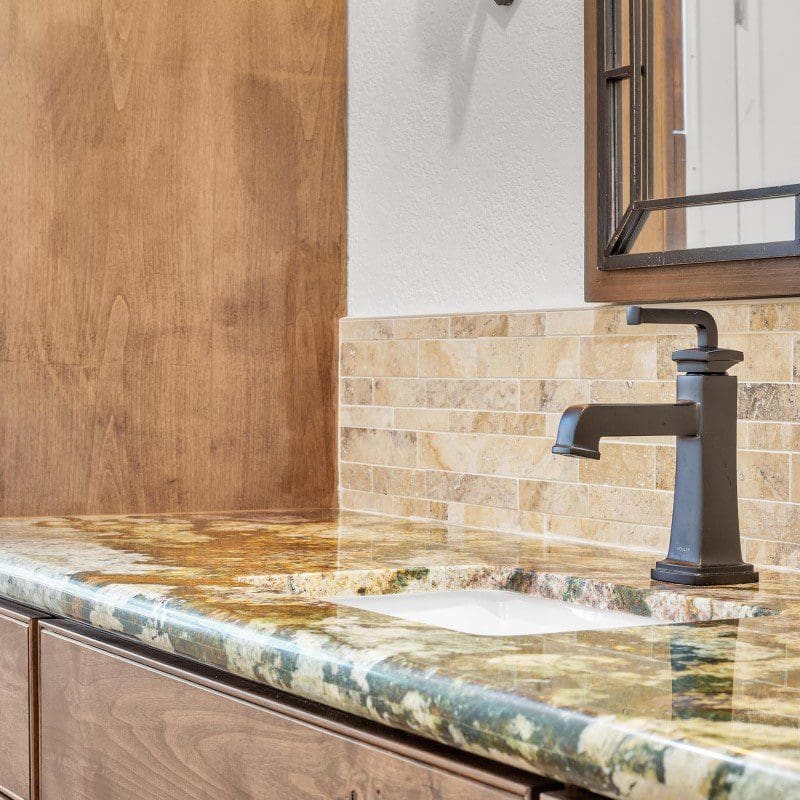
- Natural Stone (Granite/Marble): Beautiful and unique. But marble etches—vinegar, citrus, anything acidic leaves a dull mark. Granite needs sealing. In a busy household, they demand a bit of reverence.
- Porcelain Slabs: The new contender. Incredibly tough, stain-proof, and can mimic stone or concrete beautifully. The large format means you can often get a seamless look with an integrated sink basin.
We’ve seen too many people choose a porous material for the love of the look, only to be frustrated by the maintenance. For 99% of our clients, we steer them toward quartz or porcelain. Your morning routine shouldn’t include anxiety about water rings.
The Sink Decision: Undermount, Integral, or Vessel?
This choice marries your countertop selection to your daily function.
| Sink Type | The Reality | Best Paired With | A Word of Caution |
|---|---|---|---|
| Undermount | Clean look, easy to wipe crumbs into sink. | Stone or quartz countertops. | The lip is hidden, so the counter edge is exposed. Requires a solid material. |
| Integral (One-Piece) | Seamless, ultra-hygienic, modern. | Porcelain or solid-surface materials. | Can be pricey. Your sink and countertop are forever married. |
| Vessel | Statement-making, easier install for DIY. | Any countertop, even wood. | They create a ledge that collects dust and toothpaste splatter. Harder to clean around. |
We almost always recommend an undermount. It’s the perfect blend of aesthetics and practicality. Vessel sinks? They’re a specific taste. We’ve removed more of them in second-renovations than we’ve installed lately—they tend to feel dated and fussy after a few years.
Storage: It’s Not Just About Drawers
Everyone wants drawers. They’re great for hair tools, cosmetics, and linens. But think vertically. What about that awkward plumbing space in the middle? A “false drawer” front that opens to reveal a tilt-out tray for toothpaste and floss is a game-changer. Or, specify a bank of drawers on one side and a door cabinet on the other for taller items like cleaning sprays or extra towels. The configuration should match your actual stuff.
The Ghost in the Machine: Plumbing and Electrical
Here’s where pretty pictures meet reality. That beautiful, shallow-profile faucet you love? It requires specific mounting holes. Those drawer banks you dreamed of? They can run straight into the P-trap coming out of the wall. We’ve had to redesign more than one vanity layout on the fly because the plumbing in a 1970s San Diego home was… creatively done.
Always, always know your rough-in measurements before you finalize a vanity design. And for the love of all that is good, put an electrical outlet in each drawer side of the vanity. You’ll thank us when you’re charging a toothbrush and using a hairdryer without an extension cord.
When a 60-Inch Vanity Isn’t the Right Fit
It’s not a universal solution. If your bathroom is narrow, a 60-inch vanity with two protruding drawers can turn the room into an obstacle course. Sometimes, two separate 30-inch vanities with a gap between them feels more open. Or, if it’s just for kids or a guest bath, a single sink with more counter space is far more useful. Don’t force the double sinks just because it’s the “master bath standard.”
Bringing It All Together Without the Headache
Choosing each element in a vacuum is a recipe for a disjointed mess. The finish on the cabinet needs to talk to the hardware, which needs to complement the faucet finish, which shouldn’t clash with the countertop veining. It’s a system. This is the point where a lot of DIY projects stall, or where homeowners end up with a perfectly fine vanity that just feels “off.”
Sometimes, the most stylish choice you can make is to bring in a professional eye at the right moment. A good designer or contractor doesn’t just install boxes; they see how the plumbing, electrical, spatial flow, and aesthetics intersect. For a complex install in an older home—where you might be dealing with unlevel floors in University Heights or tricky wall construction—that expertise doesn’t just save your sanity, it saves money by preventing costly corrective work.
In the end, maximizing style with a 60-inch vanity is about intentional choices, not just picking the prettiest thing from a catalog. It’s understanding that the cabinet is the workhorse, the countertop is the stage, and the sink is the performer. Get the balance right, respect the realities of your home’s bones, and you’ll end up with a centerpiece that doesn’t just look good in a photo—it makes your daily routine feel a little bit more luxurious. And isn’t that the whole point?