Key Takeaways: A double sink adds undeniable resale appeal and convenience for couples, but it eats up precious counter space and adds cost. The right choice depends entirely on your bathroom’s size, your daily routine, and whether you value individual elbow room or a more spacious, serene countertop.
Let’s be honest, the single vs. double sink debate is one of those first-world problems that feels incredibly consequential when you’re standing in a showroom. We’ve had this conversation with hundreds of San Diego homeowners during remodels, from Pacific Beach bungalows to sprawling estates in Rancho Santa Fe. It’s rarely as simple as “more sinks are better.”
The most important thing we’ve learned? This decision is a classic trade-off between perceived convenience and actual, usable space. You’re not just choosing fixtures; you’re choosing how you’ll use the room every single morning.
What’s the core difference in daily use?
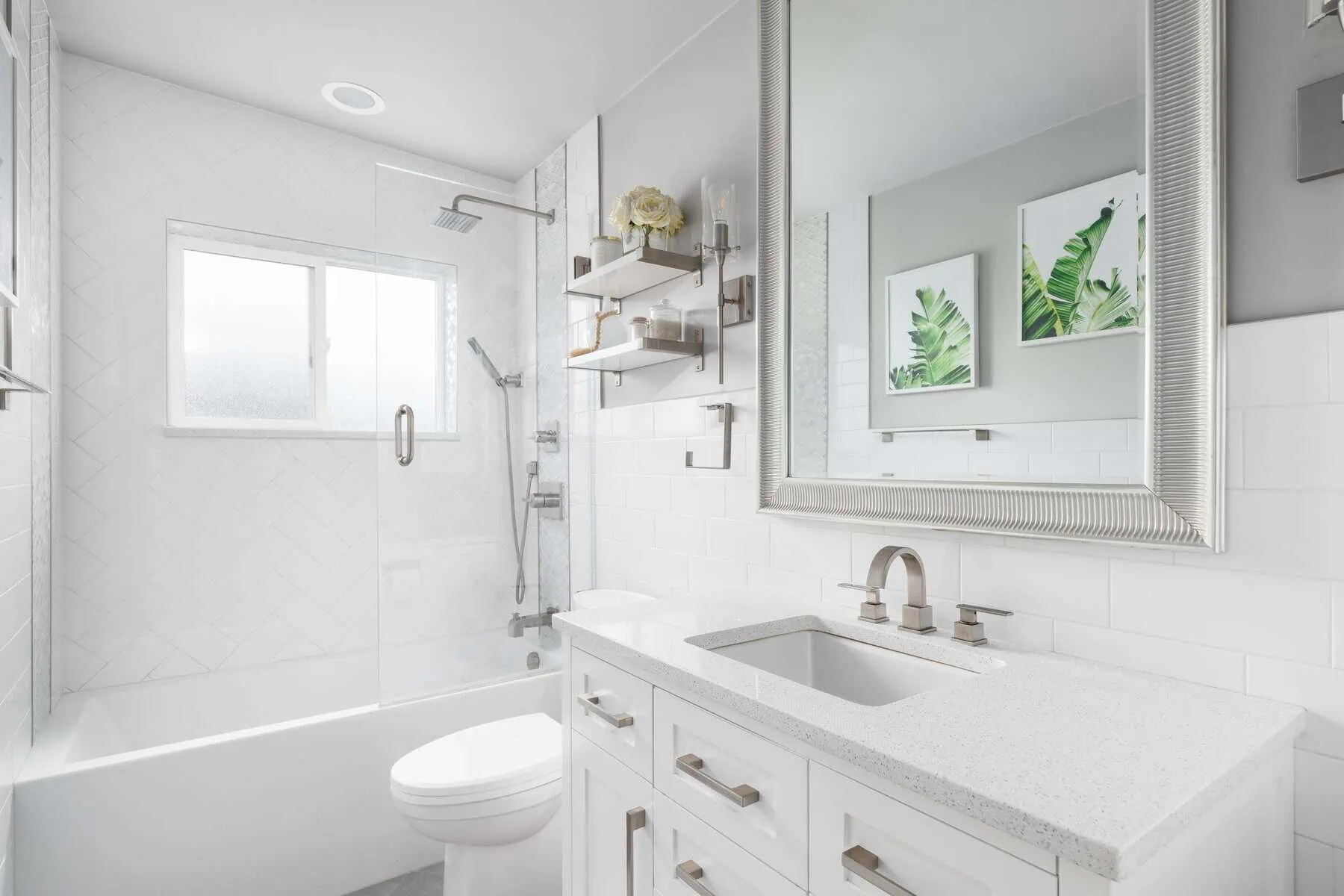
A single sink setup prioritizes counter space and a unified focal point, often creating a cleaner, more open feel. It’s ideal for individuals, couples who don’t rush out simultaneously, or anyone who values a spacious area for toiletries. A double sink, or “his and hers” vanity, is designed for simultaneous use, reducing morning bottlenecks. It’s a functional choice for busy couples or families with older children sharing a bath, but it always comes at the expense of that precious counter real estate.
The Space Equation: It’s Not Just About the Hole in the Counter
This is where most planning stumbles. You can’t just plop two basins into a vanity designed for one. Each sink needs its own dedicated plumbing rough-in, drain, and water lines. More critically, each person needs usable space around their sink.
We see the mistake all the time: a couple insists on a double in a 60-inch vanity. Once you factor in the two bowls and the necessary deck space between and on the sides, you’re left with two tiny, cramped stations and zero landing area in the middle. It feels claustrophobic. As a rule of thumb, for a comfortable double sink setup, you really want a vanity that’s at least 72 inches wide. Anything less, and you’re often better off with a single, larger basin and a more generous counter.
In many of San Diego’s charming older neighborhoods, like North Park or South Park, bathrooms are often compact. Forcing a double sink into a classic 1920s floor plan can gut the room’s functionality and charm. Sometimes, preserving the character—and your sanity—means opting for a single, statement-making sink.
The Hidden Costs (And They’re Not Just Financial)
Sure, the second faucet, set of plumbing lines, and larger countertop slab add to the budget. But consider the ongoing costs: twice the fixtures to clean, twice the potential for leaks or drippy faucets. It’s a minor point, but one our clients who’ve made the switch often mention later.
The bigger cost is in maintenance and clutter. A double sink vanity often becomes a default divider: “my side, your side.” Without rigorous discipline, that can lead to two sprawling collections of products, doubling the visual chaos. A single sink forces a bit more consolidation, which can keep the space feeling more spa-like and less like a crowded pharmacy shelf.
When a Double Sink is the Undisputed Winner
There are clear scenarios where we almost always recommend going double.
- Busy Couples with Synced Schedules: If you both leave for work at 7:30 AM, the ability to brush teeth simultaneously is not a luxury; it’s a relationship preserver.
- The Primary Bathroom Shared with Older Kids: In a family suite where teens use the parents’ bath, separate sinks can be a peace treaty.
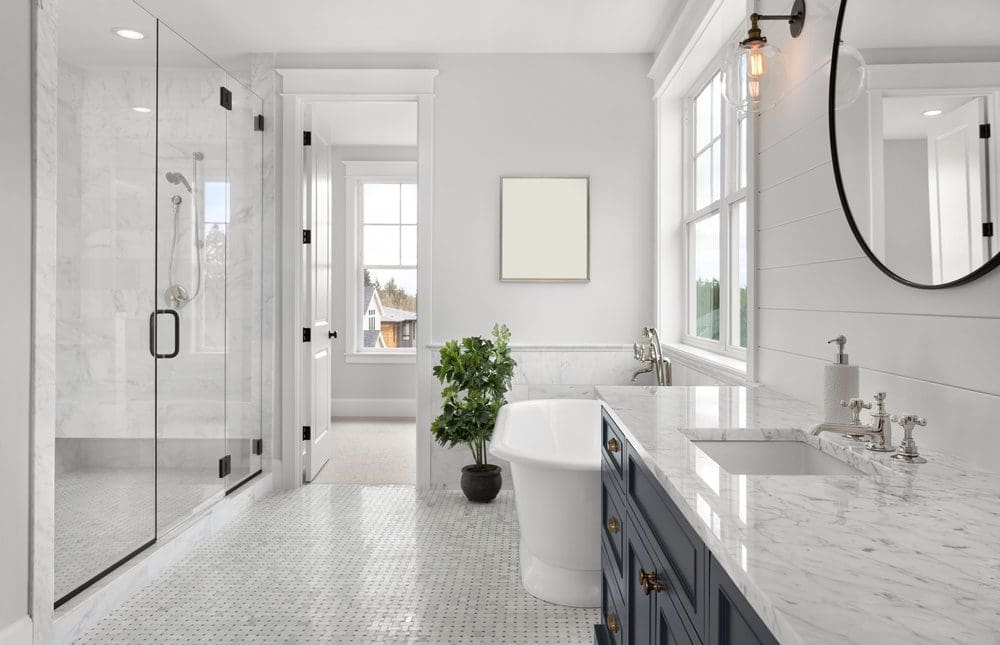
- Sheer Square Footage: When you have a sprawling bathroom with a vanity span of 8 feet or more, you have the space to do it right. You can incorporate a double sink and retain ample counter space.
The Underrated Power of a Well-Designed Single Sink
Don’t underestimate the single sink’s appeal. In a world craving simplicity, a single, beautiful basin can be the centerpiece of a calm, organized retreat. It allows for a more generous countertop on either side—perfect for a curated tray of daily essentials, a stack of towels, or a small vase of flowers from the farmer’s market.
For couples with offset schedules, or for individuals, it’s often the more practical choice. You also get more flexibility in basin size. We’re seeing a huge trend towards larger, single “statement” sinks—deep troughs, elegant stone vessels—that offer incredible functionality for washing faces, soaking items, or just looking great.
| Consideration | Single Sink Vanity | Double Sink Vanity |
|---|---|---|
| Best For | Individuals, couples with staggered routines, smaller bathrooms, clutter-haters. | Couples with simultaneous morning routines, families sharing a bath, very large bathrooms. |
| Space Impact | Maximizes usable counter and storage space. Creates a unified, often more serene, focal point. | Divides the counter. Requires a wider vanity (min. 72″ for comfort) to avoid feeling cramped. |
| Cost Implications | Lower upfront cost (one faucet, less plumbing, often a smaller slab). Lower long-term maintenance. | Higher upfront (two faucets, more plumbing, larger slab). Higher potential for future fixture repairs. |
| Resale Appeal | Neutral to positive in smaller/character homes. Seen as space-smart. | A strong perceived value in larger, suburban family homes. Expected in high-end new builds. |
| The Daily Reality | Encourages consolidation. More “landing zone” space. One person uses it at a time. | Eliminates morning line-ups. Can lead to “side ownership” and doubled clutter. |
The San Diego Specifics: Climate, Style, and Resale
Our local context matters. The coastal salt air can be tougher on fixtures, so more fixtures mean more potential for finish wear. More importantly, San Diego’s architectural styles vary wildly. A double sink can look utterly out of place in a meticulously restored Craftsman home in Kensington, but it’s almost expected in a new-build in 4S Ranch.
For resale, it’s a nuanced call. In a generic, 3-bedroom family home in a suburb like Scripps Ranch, not having a double in the primary bath might raise an eyebrow for some buyers—it’s a check-the-box feature. In a unique, smaller home near Balboa Park, buyers are more likely to value the intelligent use of space over a mandatory second basin. You’re not just installing a sink; you’re making a decision that should align with your home’s overall narrative.
What We Usually Advise Our Clients
Here’s the practical advice we give when this comes up in a design meeting at Golden Shore Design & Build:
- Measure Relentlessly: Tape it out on your current vanity. Use two separate baskets to simulate the sink bowls. Do you still have room for your stuff?
- Audit Your Routine: For one week, log your actual morning and evening bathroom use. How many true conflicts are there?
- Think Vertically: Sometimes, the better solution isn’t a second sink, but smarter storage—like mirrored medicine cabinets or shallow vertical drawers—to free up the counter around a single basin.
- Consider the Offset: In a wide vanity, a single sink placed off-center can create a defined “his” zone and “hers” zone of counter space, offering a clever compromise.
The Bottom Line
There’s no universal right answer. The double sink offers a logistical solution for simultaneous use, but it’s a space-hungry one. The single sink is an exercise in spatial efficiency and often, a more mindful design choice.
If your bathroom is under 100 square feet, or your vanity is under 70 inches, lean heavily towards a single. You’ll thank yourself for the breathing room. If you have the space to do it without sacrifice, and your daily life is a constant morning negotiation, then the double is a valid investment in domestic harmony.
In the end, it’s about designing for your real life, not an imaginary future buyer or a Pinterest board. The best choice is the one that makes your home work better for you, every day. If you’re wrestling with this in your own San Diego remodel and want a grounded, local perspective, sometimes a quick conversation with a pro who’s seen it all can save you from a costly regret. We’re always happy to look at your plans and share what we’ve seen work, and fail, in homes just like yours.
Related Articles
Single To Double Vanity Upgrade: Is It Right For Your San Diego Bathroom
Do Double Vanities Offer A Strong Return On Investment?
Mastering The Golden Rule Of Bathroom Layouts
Maximizing Style With A 60 Inch Double Sink Vanity
People Also Ask
A main bathroom often benefits from double sinks, especially in a shared household. This setup provides separate personal space for morning and evening routines, reducing conflicts over mirror and counter time. It also adds a touch of luxury and can increase your home's resale value. However, the decision largely depends on your available square footage and budget. If your main bathroom is spacious enough, double sinks are a practical upgrade. For more detailed considerations on layout and design, including how to assess your space, we recommend reading our internal article titled Remodeling Your Bathroom Guide. At Golden Shore Design and Build, we help homeowners in San Diego, Chula Vista, National City, La Mesa and Spring Valley CA make informed choices for functional and beautiful bathrooms.
For many homeowners, the choice between a single and double sink depends on your household size and daily routine. A double sink is often better for couples or families, as it allows two people to use the vanity at the same time, making morning and evening routines more efficient. However, a single sink offers a larger continuous countertop, which is ideal for small bathrooms or limited square footage. If you are considering this upgrade, our internal article titled 'Single To Double Vanity Upgrade: Is It Right For Your San Diego Bathroom' at Single To Double Vanity Upgrade: Is It Right For Your San Diego Bathroom provides detailed guidance. For expert advice tailored to your space, Golden Shore Design and Build recommends evaluating your storage needs and counter space before deciding.
For modern bathroom faucets, the current trend leans heavily toward matte black and brushed brass finishes, which offer a sophisticated contrast against lighter tiles and countertops. Wall-mounted faucets are also gaining popularity as they free up counter space and create a cleaner, minimalist aesthetic. Smart faucets with touchless activation are becoming more common for both hygiene and water conservation. When planning an upgrade, you can explore these styles in detail with our internal article titled Remodeling Your Bathroom Guide. At Golden Shore Design and Build, we often recommend selecting a finish that complements your overall hardware and lighting fixtures for a cohesive look.
To create an expensive look in a bathroom, focus on a neutral and sophisticated palette. Deep charcoal, soft greige, and warm taupe provide a rich, calming foundation. Pairing these with crisp white trim and fixtures creates a clean, high-contrast look that feels curated. For a touch of luxury, consider an accent wall in a deep navy or forest green. Metallic accents in brushed brass or matte black on hardware and lighting further elevate the space. For more inspiration on achieving a high-end feel, you can read our article 7 Features That Will Make Your San Diego Bathroom Feel Like A Luxury Hotel. At Golden Shore Design and Build, we find that avoiding stark whites and overly bright colors is key to a timeless, expensive aesthetic.
Double sinks in bathrooms are not outdated, but their relevance depends on your household's needs and bathroom layout. In master bathrooms used by two people, double sinks remain a practical and popular feature, offering convenience and reducing morning conflicts. However, in guest bathrooms or smaller spaces, a single, well-designed sink can be more efficient and cost-effective. For expert guidance on maximizing your bathroom's functionality and value, Golden Shore Design and Build recommends considering your daily routines and future resale appeal. For a deeper look into this topic, please refer to our internal article Do Double Vanities Offer A Strong Return On Investment?, which explores the return on investment for double vanities in modern homes.
For a master bathroom, the choice between a single or double sink depends on your space and daily routine. A double sink is ideal for couples who need simultaneous counter space and storage, reducing morning conflicts. However, it requires a vanity at least 60 inches wide to feel comfortable. If your bathroom is smaller, a single sink can offer more counter area and a cleaner look. For those with adequate space, our internal article titled Maximizing Style With A 60 Inch Double Sink Vanity provides excellent guidance on maximizing style with a larger vanity. Ultimately, consider your household's peak usage times. Golden Shore Design and Build recommends prioritizing function first, as a well-planned layout adds lasting value to your San Diego home.
A double sink vanity is a popular choice for shared bathrooms, as it provides individual counter space and storage for two people. For a standard bathroom, a 60 inch double sink vanity is often the ideal size, balancing functionality with available floor space. When planning your layout, ensure you have at least 30 inches of clearance in front of the vanity for comfortable use. For a comprehensive guide on selecting the perfect fixture, including design tips and material recommendations, we highly recommend reading our detailed article Maximizing Style With A 60 Inch Double Sink Vanity. This resource will help you understand how to maximize both style and utility in your master bath or guest bathroom remodel.
For a double vanity setup, it is standard to have two sinks, but a single-sink double vanity is a functional choice for maximizing counter space. This configuration provides ample room for toiletries and decor while still offering generous storage underneath. If you are considering this layout for a bathroom remodel in the San Diego area, the key is to choose a countertop material that can withstand daily use. For more specific design advice on selecting the perfect vanity size and style, you can refer to our internal article Maximizing Style With A 60 Inch Double Sink Vanity. Golden Shore Design and Build recommends ensuring your plumbing is properly aligned to accommodate the single basin for a seamless installation.