Building an Accessory Dwelling Unit in San Diego is the single most effective way to add livable square footage, generate rental income, and boost property value—all without buying a new home. A well-planned ADU can return 20–30 % on your investment through appreciation alone, while monthly rents of 1,900–3,600 dollars create immediate cash flow. The “secret” is not one magic trick but a sequence of informed decisions: understand the latest 2025–2026 regulations, choose the right ADU type for your lot, budget realistically, lock in low‑cost financing, and partner with a design‑build firm that handles architecture, engineering, permits, and construction under one roof. This article unpacks every step, with data, tables, and actionable advice, so you can move from curiosity to keys in hand.
Table of Contents
1. Why Build an ADU in San Diego?
-
Rental income – Long‑term ADU rents in San Diego average 1,900–3,600 dollars per month, with high‑demand neighborhoods pushing above 3,800 dollars.
-
Property appreciation – A 2025 FHFA study found that homes with ADUs appreciated 22 % more than those without over a decade. San Diego‑specific estimates place the uplift at 25–35 %.
-
Multigenerational living – An ADU gives aging parents or adult children private, accessible space while keeping the family connected.
-
Home‑office separation – Post‑pandemic, a detached ADU serves as a dedicated, quiet workspace.
-
Housing supply solution – ADUs add infill housing without sprawl, aligning with California’s housing goals.
2. San Diego ADU Regulations: 2025–2026 Updates
The City Council adopted a sweeping package of 25 reforms on June 16, 2025, effective August 22, 2025 (outside the Coastal Zone; Coastal Zone implementation expected in 2026). Key changes:
| Regulation | Previous Rule | 2025–2026 Rule |
|---|---|---|
| Unit caps (single‑family lots) | Unlimited through Bonus Program | ≤ 8,000 sq ft: max 4 ADUs/JADUs; 8,001–10,000 sq ft: max 5; > 10,000 sq ft: max 6 |
| Bonus ADU program | Available in most RS zones | RS (single‑family) zones excluded; program now limited to multi‑family and certain density zones |
| Maximum size | No hard cap under state law | 1,200 sq ft maximum for detached ADUs |
| Height | Three stories allowed in some cases | Limited to two stories |
| Fire‑safety setbacks | No specific requirement | 4‑ft side and rear setbacks in High/Very High Fire Hazard Severity Zones |
| Cul‑de‑sac prohibition | Not addressed | ADUs prohibited on cul‑de‑sacs in high‑wildfire‑risk areas |
| Owner‑occupancy | Required for JADUs | Owner‑occupancy mandate eliminated for 5 years (state law) |
| Parking | One space per unit | Reduced or eliminated near transit; bonus units require off‑street parking |
State‑law floor – California law still guarantees one ADU up to 800 sq ft on most residential lots, regardless of local zoning.
AB 1033 – ADU condo sales – San Diego County now permits detached ADUs to be sold as individually deeded condominium units, unlocking a new exit strategy for investors.
3. Types of ADUs: Which One Fits Your Property?
| ADU Type | Description | Typical Size | Best For |
|---|---|---|---|
| Detached ADU | Standalone unit in the backyard | 400–1,200 sq ft | Maximum privacy, rental income, multigenerational living |
| Attached ADU | Addition connected to the main house | 400–1,200 sq ft | Expanding living space for family, lower utility costs |
| Junior ADU (JADU) | Converted bedroom or attached space, max 500 sq ft | Up to 500 sq ft | Low‑cost rental, home office, caregiver suite |
| Garage Conversion | Existing garage converted to living space | 200–600 sq ft | Fastest path, lower construction cost, preserves yard |
| Pre‑Approved Plans | City‑vetted designs that fast‑track permitting | Varies | Speed, reduced design fees, predictable costs |
Contextual bullet points:
-
Detached ADUs offer the highest rental premium and best privacy.
-
Attached ADUs share utility connections, lowering infrastructure costs.
-
JADUs do not require additional parking and can share a bathroom with the main house.
-
Garage conversions often avoid foundation work but require upgrading insulation, electrical, and egress.
-
San Diego’s ADU Standard Plan Program provides pre‑approved designs that shorten plan‑check to as little as 30 days.
4. ADU Costs in San Diego: A Detailed Breakdown
| Cost Category | Detached 500 sq ft | Detached 800 sq ft | Garage Conversion 400 sq ft | JADU 500 sq ft |
|---|---|---|---|---|
| Design & Engineering | 8,000–15,000 dollars | 12,000–20,000 dollars | 5,000–10,000 dollars | 3,000–7,000 dollars |
| Permits & Impact Fees | 6,500–12,000 dollars | 9,000–18,000 dollars | 4,000–8,000 dollars | 2,000–5,000 dollars |
| Site Prep & Utilities | 15,000–35,000 dollars | 20,000–50,000 dollars | 5,000–15,000 dollars | 2,000–8,000 dollars |
| Construction (hard costs) | 150,000–250,000 dollars | 200,000–350,000 dollars | 80,000–150,000 dollars | 60,000–120,000 dollars |
| Contingency (10–15 %) | 15,000–35,000 dollars | 20,000–50,000 dollars | 8,000–20,000 dollars | 6,000–15,000 dollars |
| Total Range | 200,000–350,000 dollars | 270,000–500,000 dollars | 100,000–200,000 dollars | 75,000–150,000 dollars |
Sources: Site‑built ADUs average 300,000–450,000 dollars; per‑square‑foot costs range 200–400 dollars for standard finishes, up to 600 dollars for luxury. Permits alone span 6,500–21,000 dollars depending on unit size. Units under 750 sq ft are exempt from impact fees under SB 13.
Cost drivers:
-
Soil conditions and slope (hillside lots add foundation complexity).
-
Utility distance (sewer, water, electrical hookups).
-
Finish level (builder‑grade vs. custom cabinets, stone counters, high‑end flooring).
-
Fire‑safety requirements in High Fire Hazard Zones (4‑ft setbacks, sprinklers).
5. ADU Timeline: From Dream to Keys
| Phase | Duration | Key Activities |
|---|---|---|
| Feasibility & Site Analysis | 2–4 weeks | Lot survey, easement check, soil report, zoning verification |
| Design & Engineering | 4–8 weeks | Architectural plans, structural engineering, 3D renderings, Title 24 energy calculations |
| Permitting | 2–6 months | Plan submittal, plan‑check corrections, building permit issuance; pre‑approved plans can cut this to 30–60 days |
| Construction | 6–12 months | Foundation, framing, MEP rough‑ins, drywall, finishes, inspections |
| Close‑out | 2–4 weeks | Final inspection, certificate of occupancy, punch‑list completion |
Total typical timeline: 10–14 months. Pre‑approved plans and a design‑build firm with in‑house permitting can compress the schedule to 8–10 months.
Bullet points:
-
Permits expire three years after issuance if construction has not reached final inspection.
-
Coastal Zone projects add 2–3 months for Coastal Commission certification.
-
Winter rains can delay foundation and site work; plan excavation for dry months.
6. Maximizing ROI: Rental Income and Property Value
| Metric | Value | Source |
|---|---|---|
| Monthly rent (long‑term) | 1,900–3,600 dollars | Better Place Design & Build |
| Annual gross income | 22,800–43,200 dollars | Calculated |
| Property value uplift | 20–35 % | ADU Geeks / FHFA study |
| Payback period | 4–7 years | Kenna Real Estate |
| Cap rate (rental) | 5–7 % | Market observations |
Contextual points:
-
A 1,000 sq ft ADU in Encinitas rents for approximately 3,882 dollars per month, often covering the financing payment immediately.
-
Appraisers increasingly use the income‑comparison approach for ADU‑equipped properties, valuing both the square footage and the rental cash flow.
-
Under Proposition 13, adding an ADU does not trigger a full property‑tax reassessment; only the ADU’s value is added to the base assessment.
7. Financing Your ADU: Options and Programs
| Financing Option | Best For | Key Features | Typical Rate (2026) |
|---|---|---|---|
| HELOC | Homeowners with equity | Revolving credit line; interest‑only draw period | 7.5–9.0 % |
| Home Equity Loan | Fixed‑rate certainty | Lump sum, fixed rate, 10–30‑year term | 7.0–8.5 % |
| Cash‑Out Refinance | Low existing mortgage rate | Replace current loan; tap equity | 6.5–7.5 % |
| Construction‑to‑Permanent | New builds | Single close; converts to permanent mortgage | 7.0–9.0 % |
| SDHC ADU Finance Program | Moderate‑income homeowners | Below‑market rate, deferred payment options | As low as 3–5 % |
| CalHFA ADU Grant | Income‑qualified | Up to 40,000 dollars for pre‑development costs | Grant (no repayment) |
| Hard Money / Bridge Loan | Investors, quick close | 12–24‑month term, interest‑only | 9–12 % |
Sources: San Diego Housing Commission ADU Finance Program offers some of the lowest‑cost ADU financing statewide. CalHFA provides up to 40,000 dollars for soft costs. HELOCs typically cover 160,000–280,000 dollars for a 500–800 sq ft unit.
Pro tips:
-
Lock in financing before starting design to set a firm budget ceiling.
-
The ADU’s projected rental income can be counted toward debt‑to‑income ratios for qualifying.
-
Deed‑restricted affordable ADUs may qualify for additional density bonuses and reduced fees under the modified Bonus Program.
8. Design Secrets for a High‑Value ADU
-
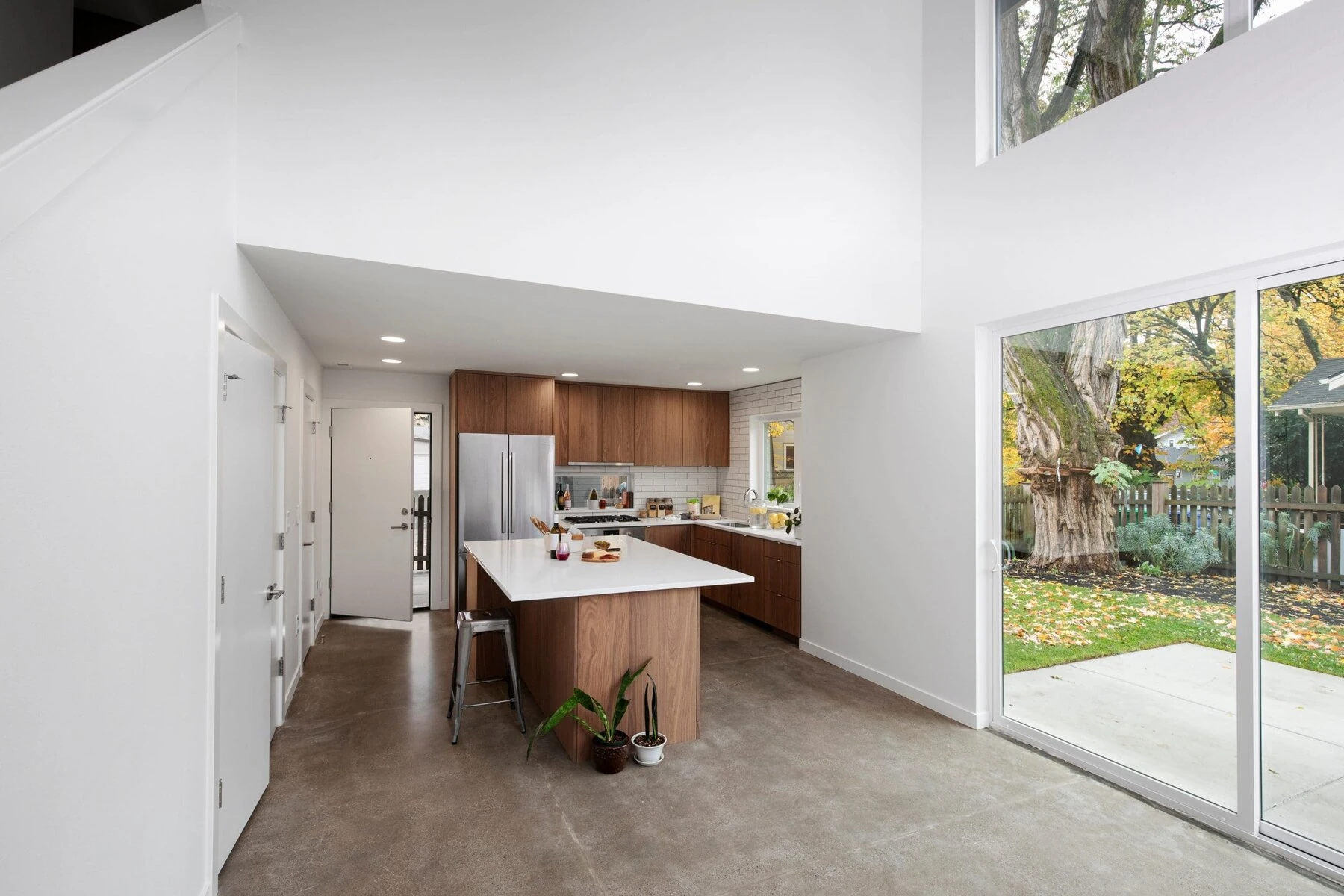
Prioritize natural light – Large windows, clerestory glass, and sliding patio doors make small spaces feel expansive and reduce energy use.
-
Vaulted ceilings – A 9‑ft or vaulted ceiling in the living area adds perceived volume without increasing footprint.
-
Open floor plan – Combine kitchen, dining, and living into one fluid space to maximize functionality.
-
Built‑in storage – Window seats, under‑stair drawers, and floor‑to‑ceiling cabinetry eliminate clutter.
-
Separate entrance – A dedicated pathway and entrance enhance the ADU’s appeal as a rental unit.
-
Soundproofing – Double‑stud walls or resilient channels between ADU and main house ensure privacy for both units.
-
Outdoor connection – A small deck, patio, or courtyard extends the living area and captures San Diego’s indoor‑outdoor lifestyle.
-
Energy efficiency – Title 24 compliance, mini‑split HVAC, LED lighting, and low‑E windows keep utility bills low and comfort high.
-
Designing after understanding the site prevents costly mid‑construction changes.
-
A 400 sq ft ADU that feels cramped will rent for far less than a well‑designed 400 sq ft unit.
-
Consider who will use the ADU in 5–10 years—a rental needs a full kitchen; a home office benefits from soundproofing.
9. Permitting Process Simplified
-
Pre‑application site review – Verify zoning, easements, utility capacity, and any overlay restrictions.
-
Plan preparation – Architectural drawings, structural calculations, Title 24 energy reports, and site plan.
-
Plan submittal – Submit to the City of San Diego Development Services Department (DSD).
-
Plan check – DSD reviews for building code, zoning, fire, and public works compliance. Expect 1–3 rounds of corrections.
-
Permit issuance – Once approved, pay permit fees and receive the building permit.
-
Construction inspections – Foundation, framing, MEP, insulation, drywall, final.
-
Certificate of Occupancy – Issued after final inspection passes; the ADU is now legal to occupy.
Pre‑approved plan shortcut: AB 1332 (effective January 1, 2025) requires cities to offer pre‑approved ADU plans. San Diego’s program promises a 30‑day permit decision for complete applications using these plans.
10. Common Pitfalls and How to Avoid Them
| Pitfall | Consequence | How to Avoid |
|---|---|---|
| Skipping a feasibility study | Unbuildable lot, wasted design fees | Conduct a professional site analysis before drawing plans |
| Under‑budgeting for utilities | Mid‑project cash crunch | Get utility‑connection quotes early; budget 15–20 % of total for site/utility work |
| Ignoring HOA or CC&R restrictions | Legal delays, fines | Review all covenants, conditions, and restrictions before design |
| Choosing the lowest bid | Change orders, subpar materials, delays | Vet contractors by past ADU experience, not price; verify license, bond, insurance |
| Over‑customizing | Blown budget, extended timeline | Use standard dimensions for cabinets, windows, and doors; save custom touches for finishes |
| Neglecting fire‑safety rules | Permit denial, forced redesign | Check Fire Hazard Severity Zone maps; apply 4‑ft setbacks in high‑risk areas |
| Missing the AB 1033 opportunity | Lost ability to sell ADU separately | If in unincorporated county, confirm ADU condo‑sale eligibility early |
11. Why Choose Golden Shore Design & Build for Your San Diego ADU?
Golden Shore Design & Build delivers every phase of ADU creation—architecture, 3D renderings, structural engineering, permit coordination, and construction—through a single, accountable team. Homeowners avoid the finger‑pointing that plagues multi‑contractor projects and gain a clear line of communication from feasibility to final inspection.
-
In‑house design‑build – No hand‑offs between architect and builder; faster decisions, fewer errors.
-
Transparent pricing – Detailed line‑item budgets with no hidden fees; you see exactly where every dollar goes.
-
Dedicated project manager – One point of contact who provides weekly updates and manages the schedule.
-
Deep ADU expertise – Intimate knowledge of San Diego’s 2025–2026 ADU ordinances, bonus‑program changes, fire‑safety rules, and permit shortcuts.
-
Licensed, bonded, insured – California general contractor license, full liability and workers’ compensation coverage.
-
On‑time, on‑budget track record – A portfolio of completed ADUs, whole‑home remodels, and custom homes across San Diego County, from coastal enclaves to inland communities.
-
Satisfaction guarantee – Clear communication and a commitment to making every project a 5‑star experience.
Free design consultation – Discuss your property, explore ADU possibilities with 3D renderings, and receive a preliminary budget—all with no obligation. Book your consultation today at gsdb.us.
12. Frequently Asked Questions
How much does a typical ADU cost in San Diego?
A detached 500–800 sq ft ADU ranges from 200,000 to 500,000 dollars, including design, permits, site work, and construction. Garage conversions and JADUs fall in the 75,000–200,000 dollar range. Premium finishes and difficult sites push costs higher.
How long does it take to build an ADU?
Plan on 10–14 months from design to certificate of occupancy. Pre‑approved plans and a design‑build firm can shorten the schedule to 8–10 months.
Can I sell my ADU separately from my house?
Yes, under AB 1033. The City of San Diego and San Diego County now allow detached ADUs to be sold as condominium units, provided the local ordinance requirements are met.
Will building an ADU increase my property taxes?
Only the ADU’s added value is assessed; the rest of the property remains under the original Proposition 13 base value. Rental income from the ADU is subject to state and federal income tax.
Do I need to live on the property?
Not for a standard ADU. The owner‑occupancy requirement has been waived for five years under state law. JADUs, however, still require owner‑occupancy in one of the units.
What is the San Diego ADU Standard Plan Program?
A library of pre‑approved ADU designs that streamline plan‑check and reduce design costs. Permits for projects using these plans can be issued within 30 days of a complete application.
Sources: City of San Diego Development Services, California Department of Housing & Community Development, ADU Geeks, SnapADU, Better Place Design & Build, FHFA, and Golden Shore Design & Build internal data. All regulatory details are current as of May 2026.
People Also Ask
The $40,000 grant in California for Accessory Dwelling Units (ADUs) is part of the state's CalHFA ADU Grant Program. This program provides up to $40,000 in pre-development and construction costs for homeowners to build an ADU on their property. The funds can be used for site preparation, permits, utility connections, and design fees. Eligibility requires the homeowner to occupy the primary residence and meet income limits. For homeowners in San Diego, Chula Vista, National City, La Mesa, and Spring Valley CA, Golden Shore Design and Build can assist with navigating this grant process and designing a compliant ADU that maximizes the funding. It is important to consult with local planning departments to ensure your project meets all requirements before applying.
The ultra wealthy in San Diego predominantly reside in the exclusive enclave of Rancho Santa Fe, known for its expansive estates, privacy, and equestrian properties. Other affluent neighborhoods include La Jolla, Del Mar, and the coastal areas of Coronado. For those seeking high-end renovation services in this prestigious market, our internal article titled Luxury Home Renovation Services in Rancho Santa Fe provides comprehensive guidance on custom design and luxury finishes. Golden Shore Design and Build specializes in transforming these elite properties with meticulous craftsmanship, ensuring every detail reflects the homeowner's sophisticated taste.
The cost of an Accessory Dwelling Unit (ADU) in San Diego varies based on size, design, and site conditions. On average, a detached ADU ranges from $150,000 to $300,000, while a garage conversion can be more affordable, typically between $80,000 and $150,000. These estimates include construction, permits, and basic finishes, but factors like utility connections, foundation work, and custom features can increase the total. It is important to budget for professional design and engineering to ensure compliance with local zoning. For a detailed breakdown tailored to your property, we recommend reviewing the comprehensive guide in our internal article titled FAQ Golden Shore Design & Build — San Diego. This resource provides specific insights for homeowners in San Diego, Chula Vista, National City, La Mesa, and Spring Valley.
While Accessory Dwelling Units offer many benefits, there are notable disadvantages to consider. The most significant is the high upfront cost of construction, which can strain a homeowner's budget. Additionally, building an ADU often reduces your available backyard space, which may impact your enjoyment of the property. There are also strict zoning and permitting requirements that can delay projects by months. Finally, if you plan to rent the unit, being a landlord comes with ongoing responsibilities for maintenance and tenant management. At Golden Shore Design and Build, we help homeowners in San Diego and Chula Vista weigh these factors carefully to ensure an ADU aligns with their long-term goals.